
What You Get on Every Delivery
Live GPS tracking
Live GPS tracking shared automatically with stakeholders
Signture & Proof of delivery
Photo + signature POD delivered same day
Trained & insured Couriers
W-2 or vetted IC couriers — never app-based gig drivers
Read More About Our Tracking Services
Carrier liability is the carrier's legal responsibility for goods in its care, and it is limited — by statute, by tariff, and by the terms on the bill of lading. Cargo insurance is a separate policy that indemnifies the owner for the actual value of the goods. You can hold the first and still be severely underprotected.
Conflating those two is one of the most expensive mistakes a shipper can make, and it is easy to do, because the paperwork rarely spells out the difference. A rate confirmation that mentions the carrier is "fully insured" is describing the carrier's own liability policy — the thing that pays out subject to every limit and defense in the tariff. It is not a statement about what your goods are worth or what you would actually recover.
For interstate motor freight, the governing framework is the Carmack Amendment (49 U.S.C. § 14706), which makes the carrier liable for the actual loss to the property — but expressly permits carriers to limit that liability to a released value agreed in the contract or tariff, typically expressed as a dollar amount per pound. That per-pound figure is where shippers get hurt. A pallet of electronics weighing 200 pounds with a released value of a few dollars per pound generates a maximum recovery in the hundreds while the goods are worth tens of thousands. The carrier is not being unreasonable; you agreed to it when you tendered the freight without declaring a higher value.
Parcel carriers work the same way under their own terms rather than Carmack — a default declared-value allowance with everything above it requiring a declaration and a fee, plus long exclusion lists for the categories most likely to be valuable (jewelry, art, antiques, currency, precious metals). And a certificate of insurance is a third thing again: a COI evidences that a carrier holds liability coverage, usually so a building will let the driver in. It says nothing about coverage on your goods. Our COI guide explains what that document does and does not do.

Step 1: Find out what the default limit is, in writing, before you ship. Ask the carrier for the released value or liability limit that applies to your commodity and weight. Get it in the rate confirmation or the bill of lading terms, not verbally. If you cannot state your maximum recovery in dollars, you do not know what you have.
Step 2: Declare a higher value, or buy separate cargo insurance. Declaring value with the carrier raises the liability ceiling for a fee, but it is still carrier liability with all its defenses. All-risk cargo insurance from an insurer or broker covers the goods on their own terms and generally responds more broadly. For high-value or specialty goods — jewelry, fine art, IT hardware — a specialty policy is almost always the right answer.
Step 3: Know the carrier's defenses. Even under Carmack, a carrier is generally not liable where loss results from an act of God, an act of the public enemy, an act of the shipper, an act of a public authority, or the inherent nature of the goods themselves. "Act of the shipper" includes improper packaging, and it is the defense raised most often. Freight that failed because it was packed to survive a warehouse rather than a highway is a claim you will lose. See how to ship a pallet and freight class and NMFC for packaging and classification standards.
Step 4: Note the damage on the delivery receipt before you sign. This is the highest-leverage thirty seconds in the entire process. A clean signature on the delivery receipt is powerful evidence that the freight arrived in good order. Write the specific exception — "carton 3 crushed, contents not inspected," "shrink wrap torn, 2 cases missing" — and have the driver acknowledge it. Vague notes like "damaged" help less than specific ones. Photograph the freight on the truck if you can, and again after unloading.
Step 5: File in writing, fast, with the numbers. Under the Carmack framework, carriers must allow at least nine months from delivery (or from the reasonable expected delivery date, for loss) to file a written claim, and at least two years from the date the carrier declines the claim to bring suit. Many contracts and tariffs impose much shorter windows for notice of concealed damage — often just a handful of days — so read yours. A valid claim identifies the shipment, states the nature of the loss, and demands a specific dollar amount; a vague "letting you know there was a problem" email may not qualify as a claim at all.
Learn More On Our Quality Assurance


Concealed damage is the hardest claim to win because you signed clean. If the carton looked fine and the contents were broken, you are arguing against your own signature. Mitigate it by inspecting high-value freight before the driver leaves, by noting any exterior irregularity however minor, by opening and inspecting promptly rather than weeks later, and by photographing packaging and contents together before anything is discarded. Never throw away the packaging. The carrier or insurer is entitled to inspect it, and disposing of it can end the claim on its own.
Salvage is part of the claim, not an afterthought. Damaged goods often retain value, and the claim is generally for the loss — not automatically for the full invoice with the shipper keeping the goods too. Do not destroy, return to vendor, or dispose of damaged freight before the claim is resolved; let the carrier or insurer make the salvage determination. Mitigation is also a duty: if a reasonable step would have limited the loss and you did not take it, expect that to appear in the denial.
The most common denial reasons are, in rough order: signed clean with no exception noted; insufficient packaging; claim filed after the contractual deadline; no supporting documentation (bill of lading, invoice showing value, photographs, repair or replacement quote); packaging discarded before inspection; and the commodity falling within an exclusion the shipper never read. Almost all of them are preventable at the dock, not in the claim letter.
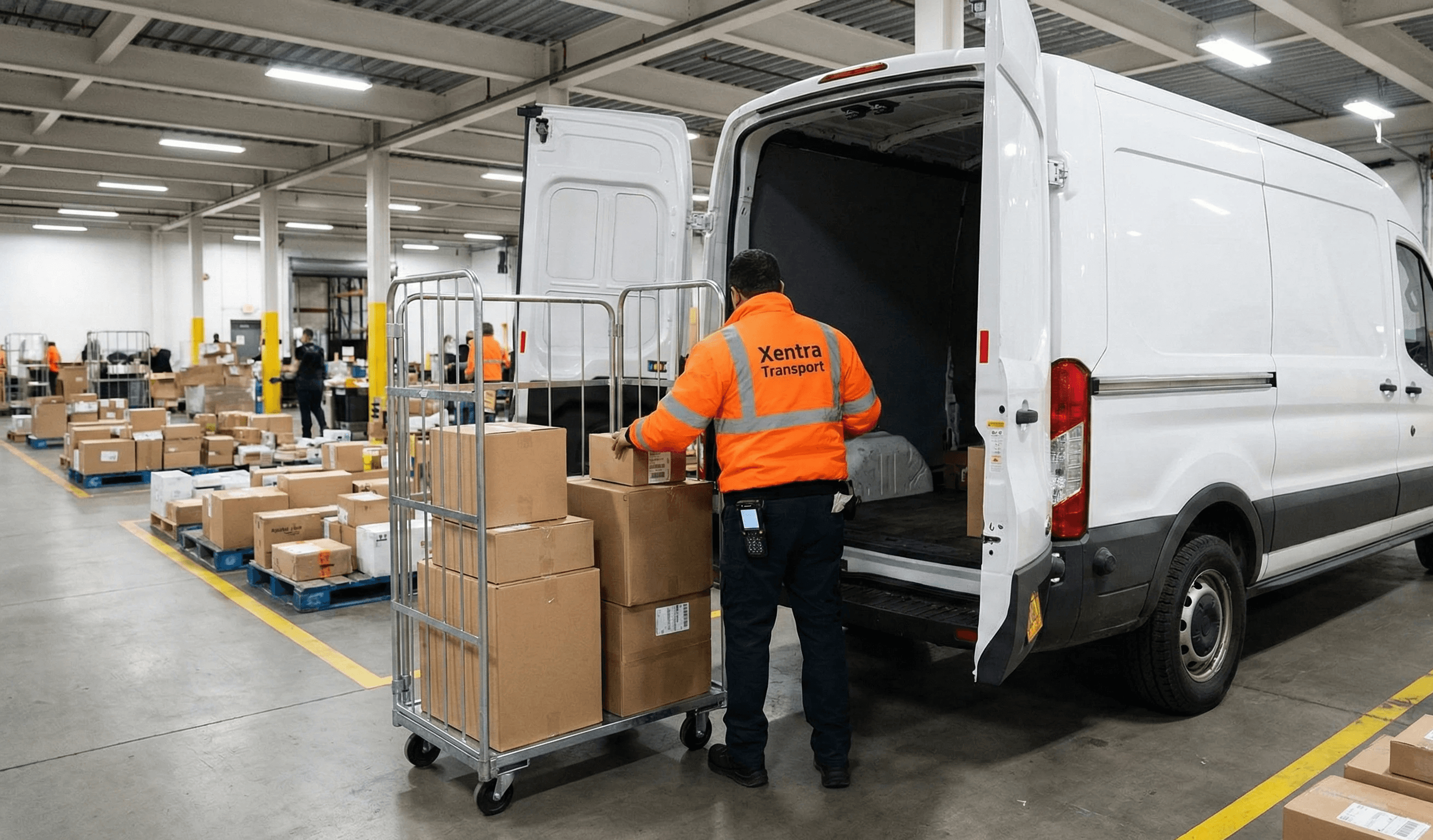
Dedicated same-day transport removes most of the handling that causes damage. Freight damage overwhelmingly happens in handling — at cross-docks, on conveyors, during restacking — not on the road. A dedicated run where one driver loads the goods and the same driver unloads them removes nearly all of those touchpoints, which is why high-value shippers pay for it. Our freight delivery, white-glove, and specialized delivery services are built on that principle, with photo proof at both ends documented through our tracking and POD system.
Where liability sits in the wider freight picture. Mode changes the analysis. LTL versus FTL decides how many carriers and cross-docks touch the shipment, and therefore how many opportunities exist for the damage to occur and for responsibility to become contested. Drayage moves under port and terminal rules with their own liability terms. Detention and demurrage are charges rather than damages — a distinction adjusters make instinctively and shippers frequently do not, and confusing the two is how a claim gets filed against the wrong party. For international movements, liability shifts again under the applicable convention and your freight forwarder's terms. Recurring inbound and vendor flows are worth structuring deliberately through vendor and supply chain logistics, and the professionals who process volume claims are covered in our insurance and claims offices practice.
None of this is legal advice. Liability terms vary by contract, commodity, mode, and whether the movement is interstate, intrastate, or international, and the right answer for a high-value or recurring exposure is a conversation with your broker or counsel. What we can tell you is exactly what liability applies on our runs and what we document. Call 877-709-2711 with your commodity and value, or see what a bill of lading is and how dimensional weight works for the paperwork side.
See Why They Choose Us
Know What You're Covered For Before You Need to Find Out
Get a Quote With Coverage Details
Meet Your Industry Needs Call Us


