What You Get on Every Delivery
Live GPS tracking
Live GPS tracking shared automatically with stakeholders
Signture & Proof of delivery
Photo + signature POD delivered same day
Trained & insured Couriers
W-2 or vetted IC couriers — never app-based gig drivers
Read More About Our Tracking Services
LTL (less-than-truckload) freight networks were built for one specific job: move a pallet 800 miles cross-country, share the truck with thirty other shippers' freight, accept the time hit in exchange for the cost split. That model works for long-haul pallet moves where the alternative is paying for a full truckload you don't need. It completely breaks the moment you're trying to move a pallet 15 miles inside the tri-state. A real example: ship a single pallet from a warehouse in Secaucus to a retailer in Manhattan. Map distance: about 15 miles. Drive time off-peak: 35 minutes by truck. Standard LTL transit time: 2-3 business days. The pallet gets picked up by an LTL truck collecting from twelve other shippers, hauled to a Newark or Edison terminal for sortation, held overnight, consolidated into an outbound trailer the next morning, driven back into the same area where it started, and delivered into a 4-hour window that forces your receiving team to sit and wait.
The whole sequence costs more in receiver labor than the freight rate itself. If your pallet is going to a Manhattan retail store, the receiving manager has to block out a 4-hour window of paid labor to sit and wait. If your pallet is going to a construction site in Long Island City, the GC's site supervisor has to do the same. If your pallet is going to a hotel renovation in Midtown, the install crew is on the clock waiting. For local and regional pallet moves, direct same-day dispatch is faster, cheaper, and actually predictable. One driver, one truck, point A to point B, photo proof of delivery, signed receipt, fixed flat-rate pricing quoted at booking. No terminal stop, no consolidation, no 4-hour window. Volume runs daily through our freight delivery service and NJ freight operations.
This guide walks through how to ship a pallet from NYC or the tri-state same-day: how to prep the load so it ships safely, which vehicle you actually need based on weight and pallet count, when you need a liftgate (and when you don't), what COI requirements look like at the receiving end, and how pricing actually works for direct pallet dispatch. For deeper context on direct vs LTL freight comparisons, see our courier vs freight vs mail guide; for distribution-warehouse-scale operations, see distribution warehouse delivery NYC.
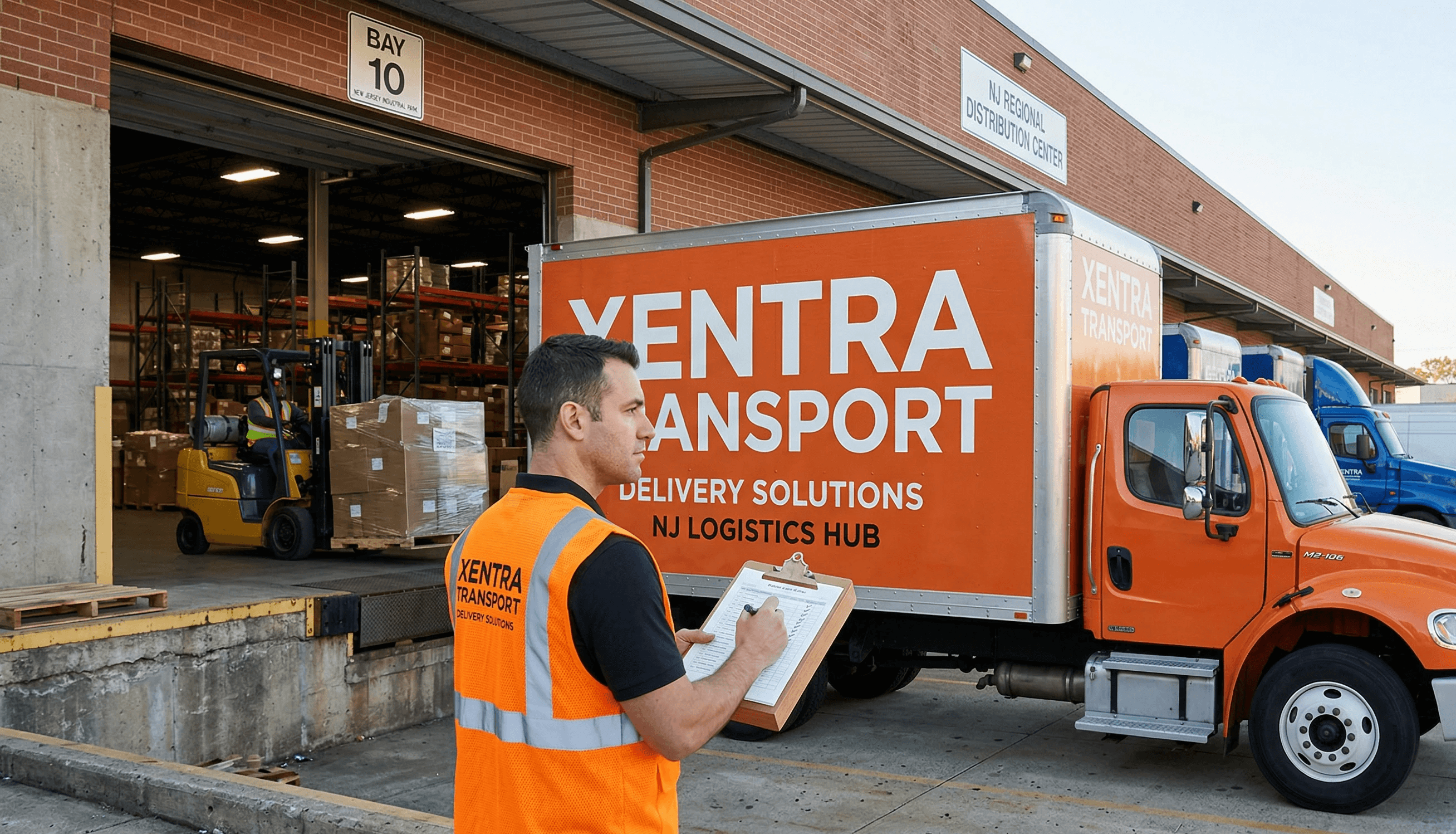
Step 1: Verify your pallet specs. Standard US pallets are 48"x40" (GMA grocery standard) and weigh 30-50 lbs empty. Loaded weight typically runs 500-2,000 lbs for retail and commercial freight, up to ~2,500-3,000 lbs for heavy industrial. If your load is taller than 60" or wider than 48", flag it at booking — it changes the vehicle requirement. Step 2: Stack and secure the load. Cartons should stack flat with weight evenly distributed; heaviest items go on the bottom. The load should not overhang the pallet edges (overhang causes damage during forklift maneuvering and street offload). Shrink-wrap the entire load with at least 4-6 wraps top-to-bottom, with the wrap continuing under the pallet edges to anchor the load to the pallet. Add corner protectors on tall stacks. Strap the load with at least two horizontal straps if items can shift in transit. Step 3: Label the pallet. Sender info on top and on at least two sides. Recipient info clearly visible. Special handling instructions ("THIS SIDE UP," "DO NOT STACK," "FRAGILE") only if they're actually true — overusing them dilutes the meaning. For chain-of-custody jobs, attach a sealed envelope with manifest paperwork to the top of the load.
Step 4: Confirm the receiving end's offload capacity. This is the most-skipped step and the most expensive when it goes wrong. Does the receiver have a loading dock with a height-matched dock plate? Does the receiver have a forklift on site? Does the receiver have a freight elevator if the destination is upstairs? Or is the receiver a curbside-only, no-dock, no-forklift commercial location requiring liftgate offload? Get this answer before booking, not after the truck arrives. A standard box truck without liftgate cannot deliver a 1,500-lb pallet to a storefront with no dock; the driver will arrive, realize the offload is impossible, and either refuse delivery or have to reschedule with a liftgate-equipped vehicle. Building Certificate of Insurance requirements should also be confirmed in advance — most Class A commercial buildings in Manhattan, the Hudson Waterfront, and high-rise commercial corridors require COI on file with property management before the truck arrives. We issue COI at no charge.
Step 5: Book with accurate pickup and drop info. Pickup address, dock vs. street pickup, contact and phone for the loading side, exact pallet count and approximate weight, drop address, dock vs. street drop at destination, COI requirement at receiver, required arrival window. The more accurate the booking info, the faster dispatch confirms vehicle, driver, and ETA. Vague bookings ("a few pallets going to a warehouse in Jersey") get hung up in dispatch clarification while accurate bookings dispatch immediately. Pricing is flat-rate quoted before dispatch — no surge pricing, no per-mile creep, no surprise accessorials. For full pricing breakdown across pallet, vehicle, and distance combinations, see our 2026 NYC courier pricing guide. For COI specifics, see our Certificate of Insurance guide. For commercial vehicle access rules across NYC streets, see our NYC commercial vehicle regulations guide.
Learn More On Our Quality Assurance
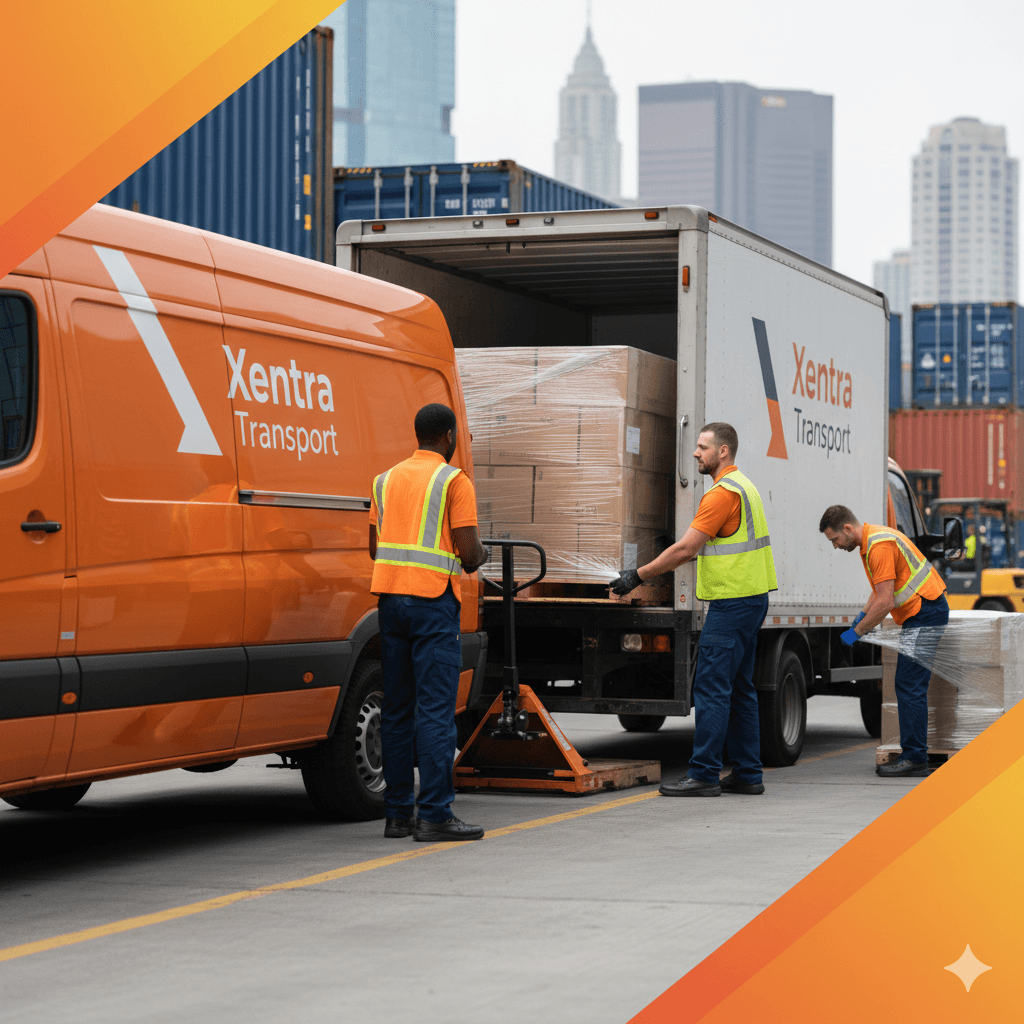
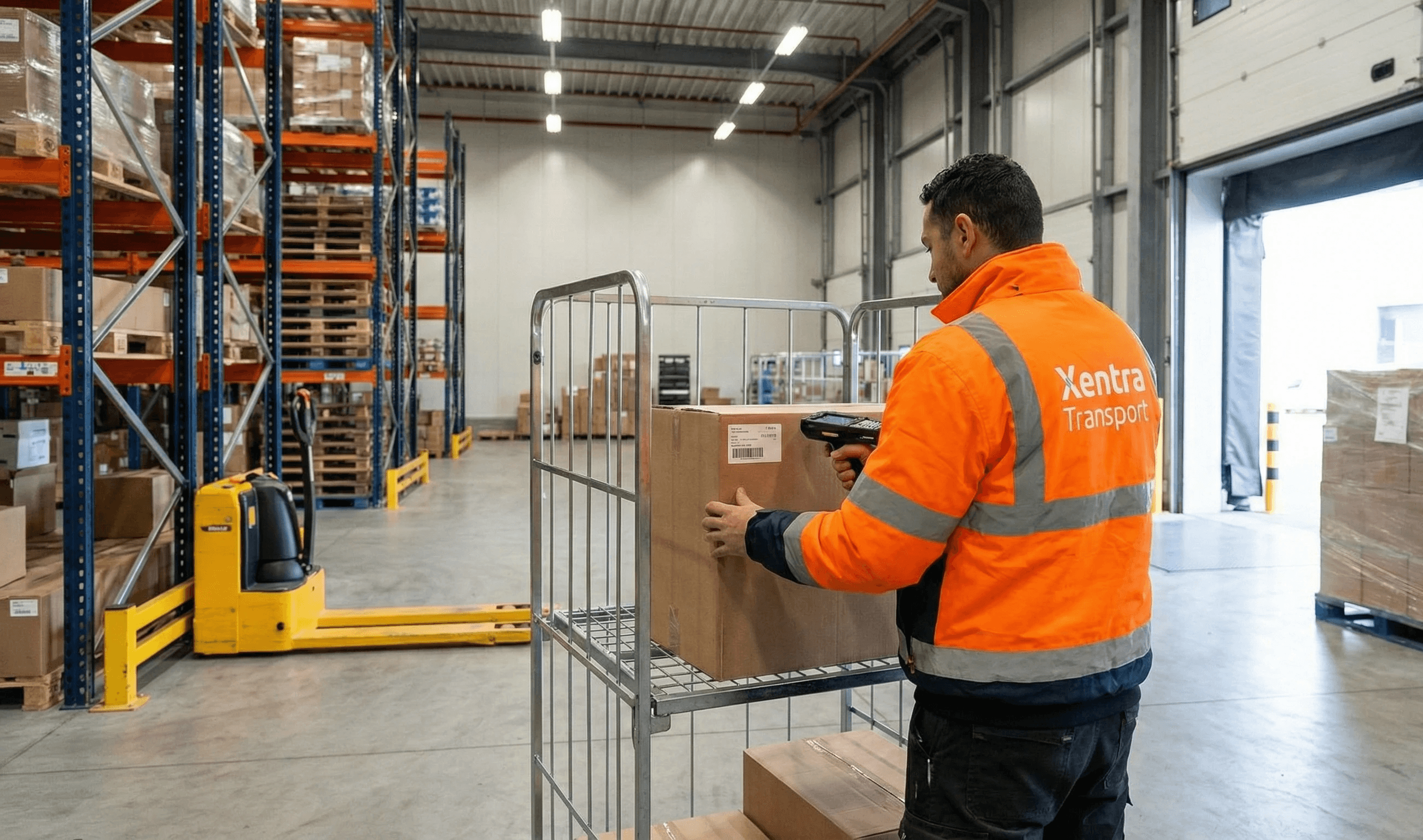

Vehicle by load size. 1 pallet, under 2,000 lbs total, simple offload at receiver: cargo van or Sprinter van handles it. Cargo van capacity runs 1-2 standard pallets up to ~3,000 lbs; Sprinter van runs 2-3 pallets up to ~5,000 lbs and accommodates taller loads. 2-6 pallets: 16- or 20-foot box truck. 6-10 pallets: 24-foot box truck. 10-12 pallets: 26-foot box truck. Liftgate available on every box truck size — critical for receivers without dock or forklift. Full vehicle stack, payloads, and dimensions at our NYC van and truck delivery page and NJ vans, box trucks, and liftgate service. If you're not sure which vehicle is right for your load, send dispatch a photo and the destination type — we'll match it. There's no upcharge for getting it right the first time; we'd rather over-truck a job by one size than show up too small.
When you need a liftgate. Any time the receiver is a curbside-only delivery — retail storefronts without a loading dock, residential walk-up addresses, walk-up commercial offices on streets without freight access, construction sites without a forklift, hospitality FF&E destinations, restaurant equipment installs, mall storefronts that offload at the entrance rather than a dock. Liftgate adds capability the truck wouldn't have on its own: hydraulic platform that lowers a 1,500-lb pallet from truck-bed height to street level, where a pallet jack can roll it the rest of the way. If you don't need a liftgate, don't book one — it adds capacity to the truck but trims a small amount of cargo space. If the receiver has a real loading dock with a properly-fitted dock plate and a forklift, a non-liftgate truck offloads faster. Detailed liftgate use cases at our forthcoming liftgate delivery explainer.
Common tri-state pallet corridors. Manhattan to Hudson Waterfront (Jersey City, Hoboken, Weehawken) — typically 60-90 minutes off-peak, ~25 miles. NY-to-NJ corridor coverage. Manhattan to Secaucus / North Bergen Meadowlands cluster — densest warehouse zone in tri-state, frequent retail-DC and warehouse-to-warehouse pallet runs. Manhattan to Edison Route 287 industrial corridor — 60-90 min off-peak, frequent runs to manufacturing and distribution. NYC to Paramus retail corridor — Bergen County retail volume. Brooklyn-to-Lakewood medical and pharmaceutical corridor through the Brooklyn-to-Lakewood route. Cross-NYC borough pallet runs (Long Island City, the Bronx Hunts Point industrial belt, Brooklyn industrial corridors) handled daily. For larger 3PL warehouse and DC operations, our NJ warehouse and 3PL service coordinates pallet logistics with consolidation and staging. Recurring pallet routes for daily store replenishment, retail chains, and manufacturing volume set up through our recurring delivery framework. After-hours and overnight pallet dispatch through overnight courier service and NJ 24/7 dispatch.
See Why They Choose Us
Skip the LTL Wait. Direct Pallet Delivery, Same Day.
Book Pallet Delivery
Meet Your Industry Needs Call Us


