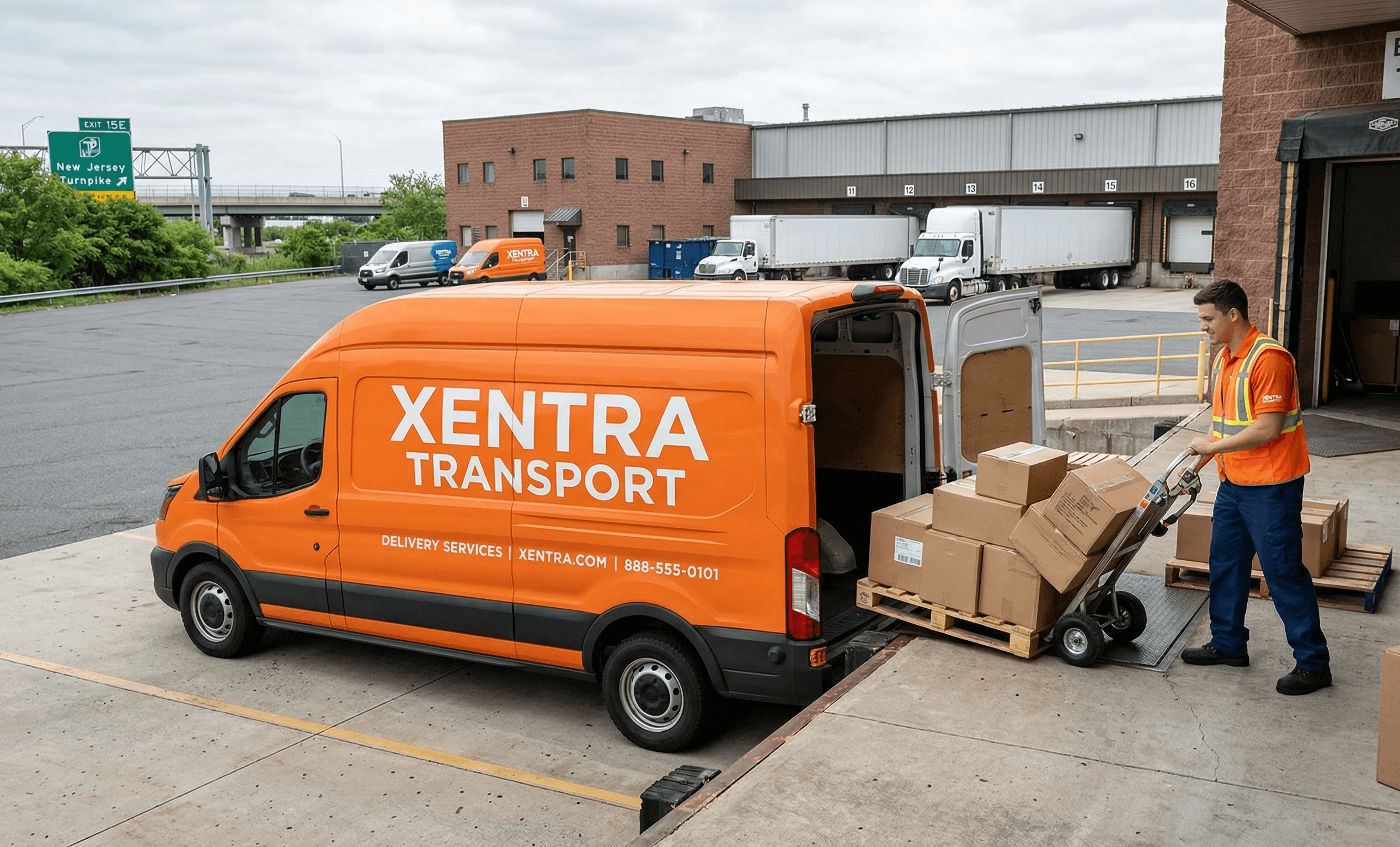




Freight delivery means moving pallets or oversized loads — anything too big for a regular courier package but not a full tractor-trailer.
A standard pallet is 48 inches by 40 inches and weighs 500 to 2,500 lbs. Most New Jersey businesses ship between 1 and 10 pallets at a time. We move freight across all of New Jersey every day. Pickups in Secaucus, Kearny, North Bergen, and the Meadowlands cluster. Drops at retail in Paramus, Hackensack, and the Bergen County mall belt. Port-area drayage off Newark, Elizabeth, and Bayonne. DC outbound to retail receivers across the state. New to shipping pallets? Read the how to ship a pallet guide first — it covers what a Bill of Lading is, how to label your pallet, and what shrink-wrap rules carriers follow. Same-day, scheduled, overnight, or recurring weekly routes — all dispatched from our in-house fleet. No broker layer. Tied into warehouse and 3PL operations through the same dispatch.
Types of Freight Delivery
LTL (Less-Than-Truckload): Economical for shipments that don't fill a whole truck, sharing space with other shippers.
FTL (Full Truckload): For large, single shipments using an entire truck.
Intermodal: Combines trucking with rail for cost-effective, long-distance transport.
Air Freight: Fast, for time-sensitive domestic or international shipments.
Ocean Freight: For large international shipments via cargo ships, often using containers.
Key Services & Features
Specialized Handling: Crating, palletizing, blanket-wrapping, and expertise for high-value or unique items.
Tracking & Technology: Real-time updates, proof of delivery, and digital management tools.
Customization: Options for liftgates, inside delivery, or handling dangerous goods.
Step-by-step, here's how a New Jersey freight delivery works.
Step 1: You send us the freight info — pallet count, weight per pallet, dimensions, what's on it (general description, no SKU detail needed), pickup address, drop address, and whether either side needs a liftgate. A liftgate is a hydraulic platform on the truck for places without a loading dock.
Step 2: We quote a flat rate. Distance-based. No fuel surcharge. No accessorial creep. You see the full price before you book.
Step 3: Truck dispatches direct from our fleet. Cargo van for 1-2 pallets, Sprinter van for 2-3, 16-ft to 26-ft box truck for 4 to 12. Detail on each: vans, box trucks, and liftgate.
Step 4: Driver picks up your freight, loads and straps it down, drives direct to the receiver. No terminal stop.
Step 5: Offload at the destination. Liftgate down for street-level offload, or dock-high if the receiver has a dock. Driver gets a signature, takes a photo, and you get the proof of delivery on your phone — see delivery tracking explained.
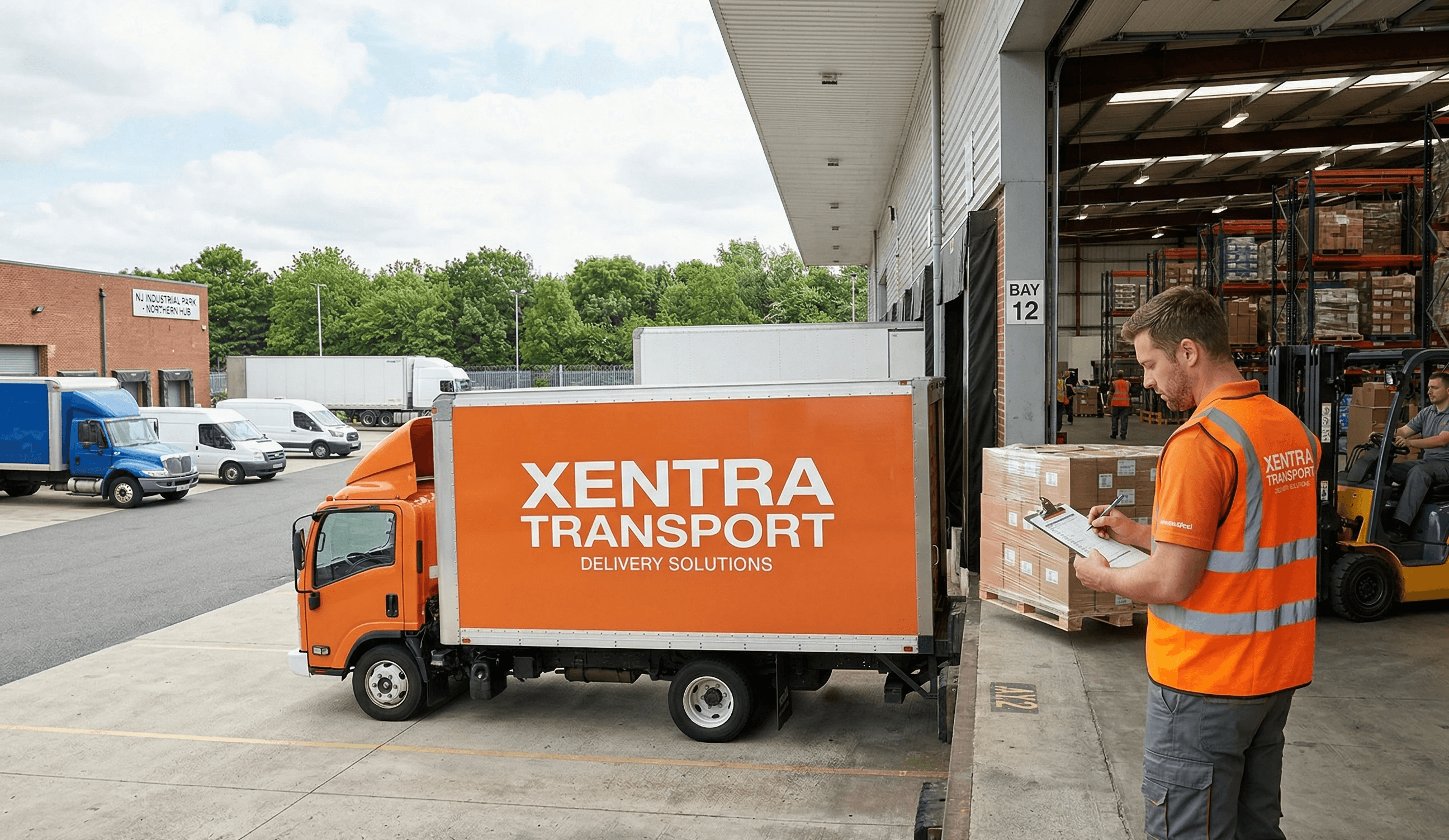
LTL stands for "Less Than Truckload"
it's the freight model where your pallet shares a truck with other shippers. It's cheap for long-haul work. It's the wrong tool for moving a pallet 18 miles inside New Jersey. Here's why. You ship one pallet from a Secaucus 3PL to a retailer in Paramus. Map distance: 18 miles. Drive time off-peak: 30 minutes. Standard LTL transit: 2 to 3 business days. The LTL carrier picks up your pallet on a route that also collects from 12 other shippers. It goes to a Newark or Edison terminal for sortation. Sits overnight.
Gets consolidated into an outbound trailer the next morning. Rides back to the same Bergen County area where it started. Delivered inside a 4-hour appointment window that ties up your receiver's dock all morning. Your real cost: the LTL line haul, plus accessorials if the receiver isn't dock-equipped (residential, limited-access, liftgate fee), plus your team's labor waiting at the dock. Often more than direct dispatch. The LTL guide walks through when LTL is the right call.
Use direct freight (us) when:
the move is inside New Jersey or to neighboring NY/PA, you need it today or this week, the receiver has a small window, or you want a flat rate without accessorial surprises. Use LTL when: the freight is going 600+ miles cross-country, you have 5+ days of flex time, and the cost difference is large enough to justify the wait.
Use a full truckload when: you have 12+ pallets or a full truck's worth and a single destination. New Jersey businesses that switched off LTL for local work include retail receivers in the Bergen County mall belt, e-commerce fulfillment at Exit 8A (Cranbury, South Brunswick, Monroe), and 3PLs in the Meadowlands. Why: the LTL wait was killing their receiving schedule and the accessorials were eating their margin. Pallet cost breakdown covers the math. For port-area drayage last-mile off Elizabeth Marine Terminal and Port Newark, see warehouse and 3PL. For cross-state freight pickup-to-NY, the NY-to-NJ corridor runs continuously.


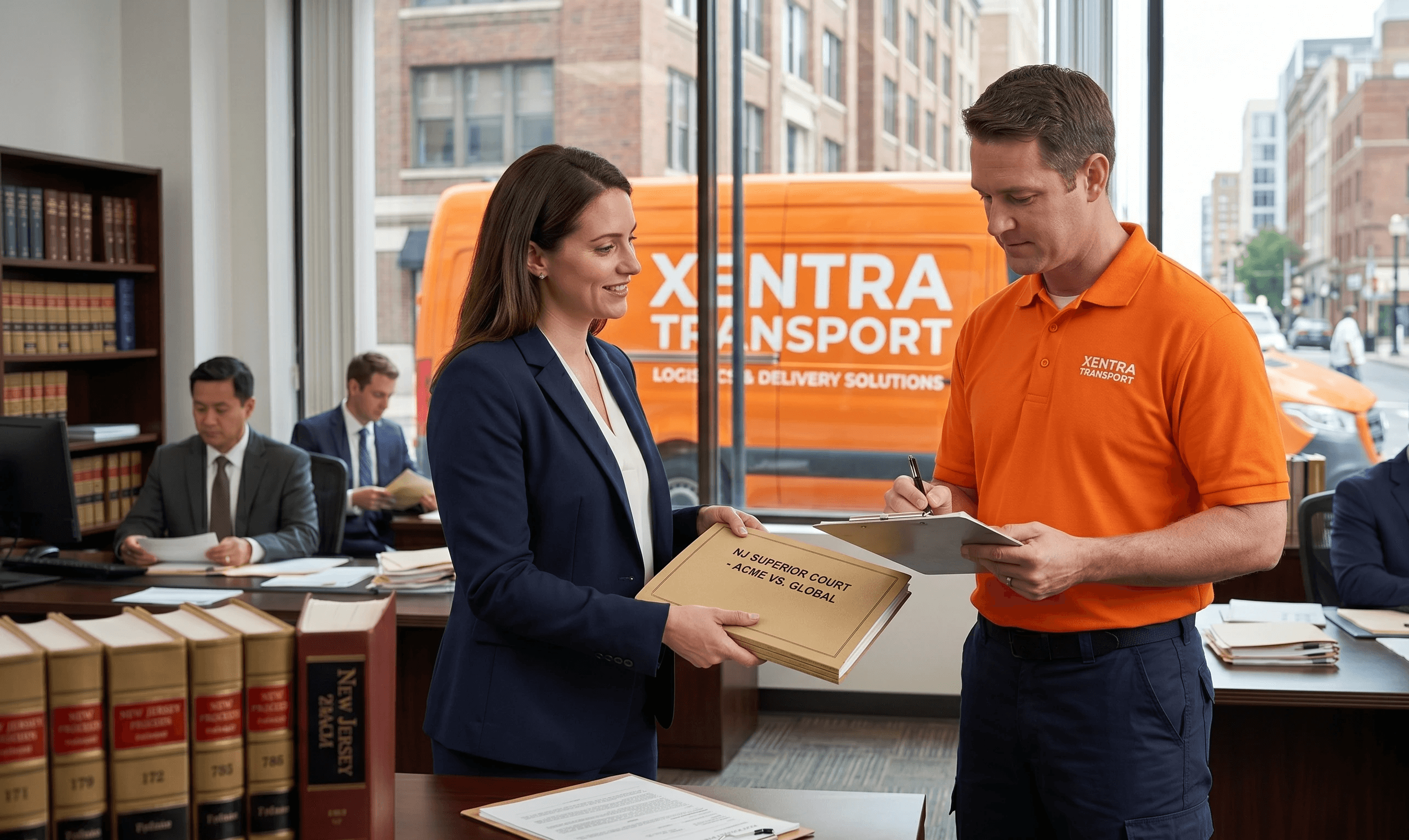
What freight costs in New Jersey. Flat-rate distance-based. Short cross-county NJ runs typically $150 to $400 for 1-3 pallets, more for full box trucks or oversized loads. No fuel surcharge. No accessorial creep. What changes the price. Vehicle size (van < Sprinter < 16-ft < 26-ft). Distance. Liftgate (modest add-on; standard on every box truck). Multi-stop count. Wait time after 15 minutes. After-hours and weekend (premium). Detail: liftgate cost and pallet cost breakdown. What does NOT change the price. Fuel. COI (free, on request at booking). TWIC-cleared driver for port-area receivers (free). To book. Pallet count, weight per pallet, dimensions, pickup address with dock or door details, delivery address with same, liftgate need at either end, receiver appointment window, and any building access requirements (COI, freight elevator, gate clearance). Call 877-709-2711 or book online. Building COI requirements: COI guide. Fragile freight: fragile shipping guide.
What freight costs in New Jersey. Flat-rate distance-based. Short cross-county NJ runs typically $150 to $400 for 1-3 pallets, more for full box trucks or oversized loads. No fuel surcharge. No accessorial creep. What changes the price. Vehicle size (van < Sprinter < 16-ft < 26-ft). Distance. Liftgate (modest add-on; standard on every box truck). Multi-stop count. Wait time after 15 minutes. After-hours and weekend (premium). Detail: liftgate cost and pallet cost breakdown. What does NOT change the price. Fuel. COI (free, on request at booking). TWIC-cleared driver for port-area receivers (free). To book. Pallet count, weight per pallet, dimensions, pickup address with dock or door details, delivery address with same, liftgate need at either end, receiver appointment window, and any building access requirements (COI, freight elevator, gate clearance). Call 877-709-2711 or book online. Building COI requirements: COI guide. Fragile freight: fragile shipping guide.
Do you deliver pallets across all of New Jersey?
Yes. We deliver pallets and freight across all 21 New Jersey counties. Newark, Secaucus, Paramus, Edison, Hackensack, Trenton, Jersey City, and every town in between.
How fast is same-day freight delivery in New Jersey?
Most New Jersey freight gets picked up within 1 to 3 hours of booking. Short intra-county runs (Secaucus to Paramus, for example) usually finish in 90 minutes total. Cross-state to NY or PA varies with traffic.
Can you do liftgate delivery in New Jersey?
Yes. Every box truck in our fleet has a hydraulic liftgate. Needed when the receiver doesn't have a loading dock — retail boutiques, restaurants, residential, walk-up offices in Jersey City or Newark, construction sites. Detail: liftgate cost guide.
Do you do port drayage in New Jersey?
Yes. We do last-mile off Port Newark Container Terminal, Elizabeth Marine Terminal, and Bayonne cargo facilities. TWIC-cleared drivers for restricted gates. Container destuffing handoff inbound, retail outbound.
What's the cheapest way to ship a pallet in New Jersey?
For local NJ runs, direct dispatch is usually cheaper than LTL once you factor in time and accessorials. For long-haul, LTL is cheaper but slower. Full comparison: cheapest delivery service and saving money on shipping.
Do you do warehouse-to-warehouse freight transfers in New Jersey?
Yes. Cross-DC inventory transfers across the Secaucus, Kearny, North Bergen, Meadowlands, and Exit 8A clusters are a big part of what we do. Recurring weekly schedules available. See warehouse and 3PL.
Can you ship freight from New Jersey to New York the same day?
Yes. The NY-to-NJ corridor runs all day. Cross-Hudson freight from Jersey City to Manhattan or Hoboken to Brooklyn dispatches direct.
What if my New Jersey freight delivery gets refused or fails?
We hold the freight in our facility and redeliver the next business day. First redelivery free. Detail: failed delivery handling.
Choose Confidence. Choose Xentra Transport.
Book NJ Freight Delivery