
What You Get on Every Delivery
Live GPS tracking
Live GPS tracking shared automatically with stakeholders
Signture & Proof of delivery
Photo + signature POD delivered same day
Trained & insured Couriers
W-2 or vetted IC couriers — never app-based gig drivers
Read More About Our Tracking Services
Recovering air cargo at JFK means collecting freight from the airline or ground handler's cargo warehouse — not a passenger terminal — and it can only happen once three things are true: the shipment has been broken down from its pallet or container, customs has released it, and a signed delivery order authorizes your carrier to collect it.
JFK's cargo operation sits in dedicated cargo buildings around the airport perimeter, each run by a different airline or third-party handler, each with its own counter, its own hours, and its own release procedure. Knowing which building your air waybill sits in is the first practical problem, and it is not always obvious from the airline name on the paperwork, because many carriers contract their warehouse handling out.
JFK is the primary international air gateway for the New York region and consistently ranks among the top US airports by value of international air freight — pharmaceuticals, electronics, high-fashion, perishables, and time-critical parts move through it constantly. That volume is exactly why the recovery process is procedural rather than casual. Warehouses release against documents and identity, not against a tracking number — and a driver who arrives without the right paperwork does not get a second look.
The critical thing to understand is that the cargo does not become available when the wheels touch down. It becomes available after the airline breaks down the shipment from its pallet or container, after any customs hold is released, and after the paperwork at the counter establishes who is authorized to take it. A driver dispatched before those three things are true is a driver sitting in a queue on your clock.

Step 1: Track the air waybill to "available for pickup." The master or house air waybill number is the reference for everything. The airline's system will show received, broken down, and released states. Dispatching against "flight landed" rather than "available" is the most common way a recovery run turns into a driver waiting in a queue on your clock.
Step 2: Clear customs before the truck rolls. Imported cargo requires a CBP release before the airline will hand it over. Your customs broker files the entry and confirms release. If the shipment is flagged for examination it moves to a centralized examination station, and the timeline stops being measured in hours — nothing a driver does at the counter changes that. Confirm release status before dispatch.
Step 3: Get the delivery order into the driver's hands. A signed delivery order from the freight forwarder or consignee is what authorizes release to a specific carrier. Without it — or with a name on it that does not match the person at the window — the warehouse will refuse. Send it ahead electronically and make sure the driver has a copy and matching identification.
Step 4: Match the equipment to the freight before dispatch. Piece count, dimensions, and total weight determine the vehicle. Loose cartons ride in a cargo van. Palletized freight needs a van or box truck with a liftgate, or a dock-height truck if the receiving end has a dock. Oversized or heavy pieces may need a flatbed or specialized equipment. Sending the wrong truck means a second trip and a second storage day. See how to ship a pallet and our van and truck fleet.
Step 5: Recover and run. Once the freight is signed for and loaded, it goes direct. From JFK, midtown Manhattan is roughly 15-17 miles and, outside of peak, reachable within the hour; Brooklyn and Queens destinations are faster still. Northern New Jersey runs cross the city, so timing matters more there — see our Hudson crossings guide for how the crossing choice affects arrival.
Learn More On Our Quality Assurance
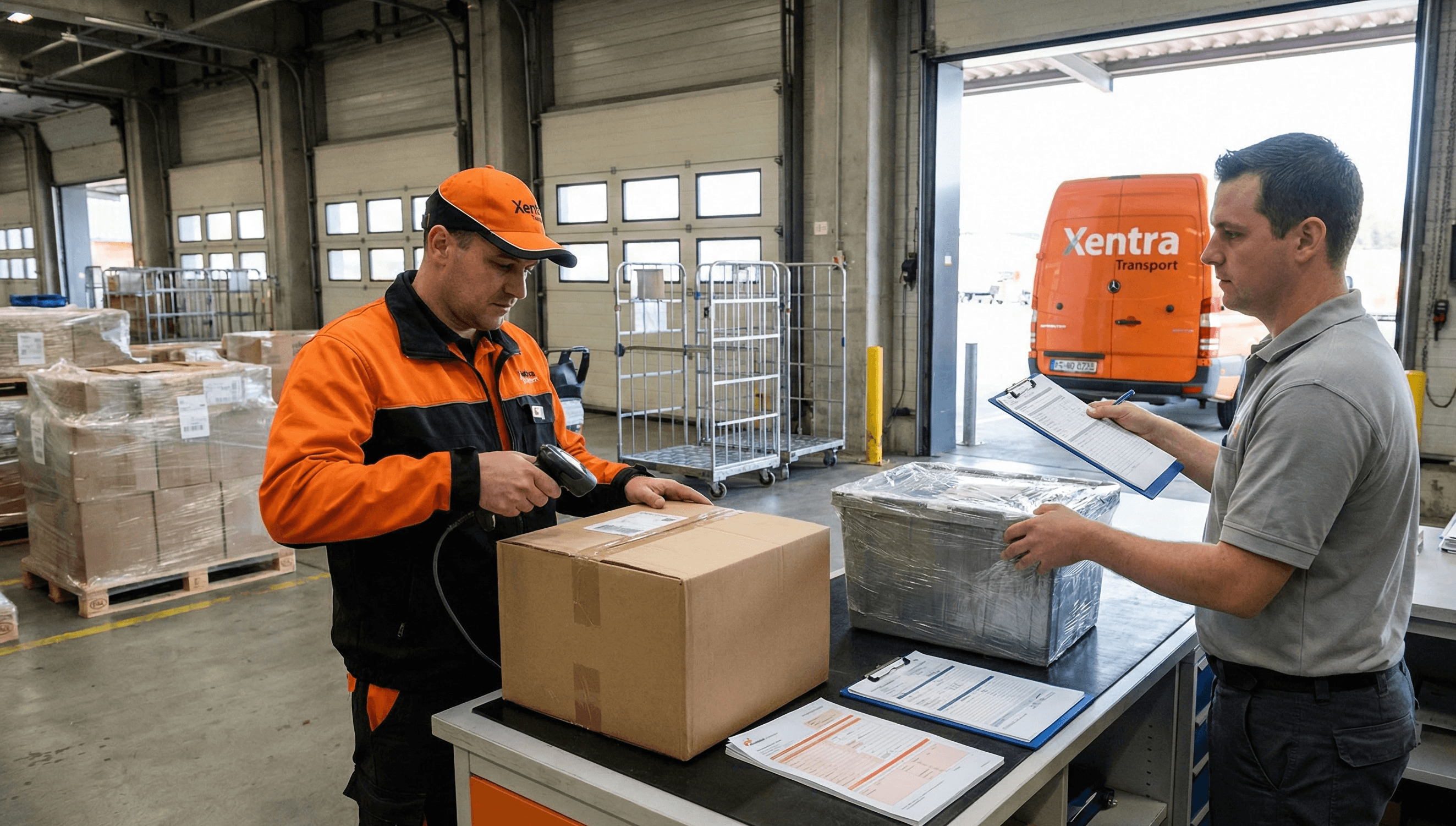
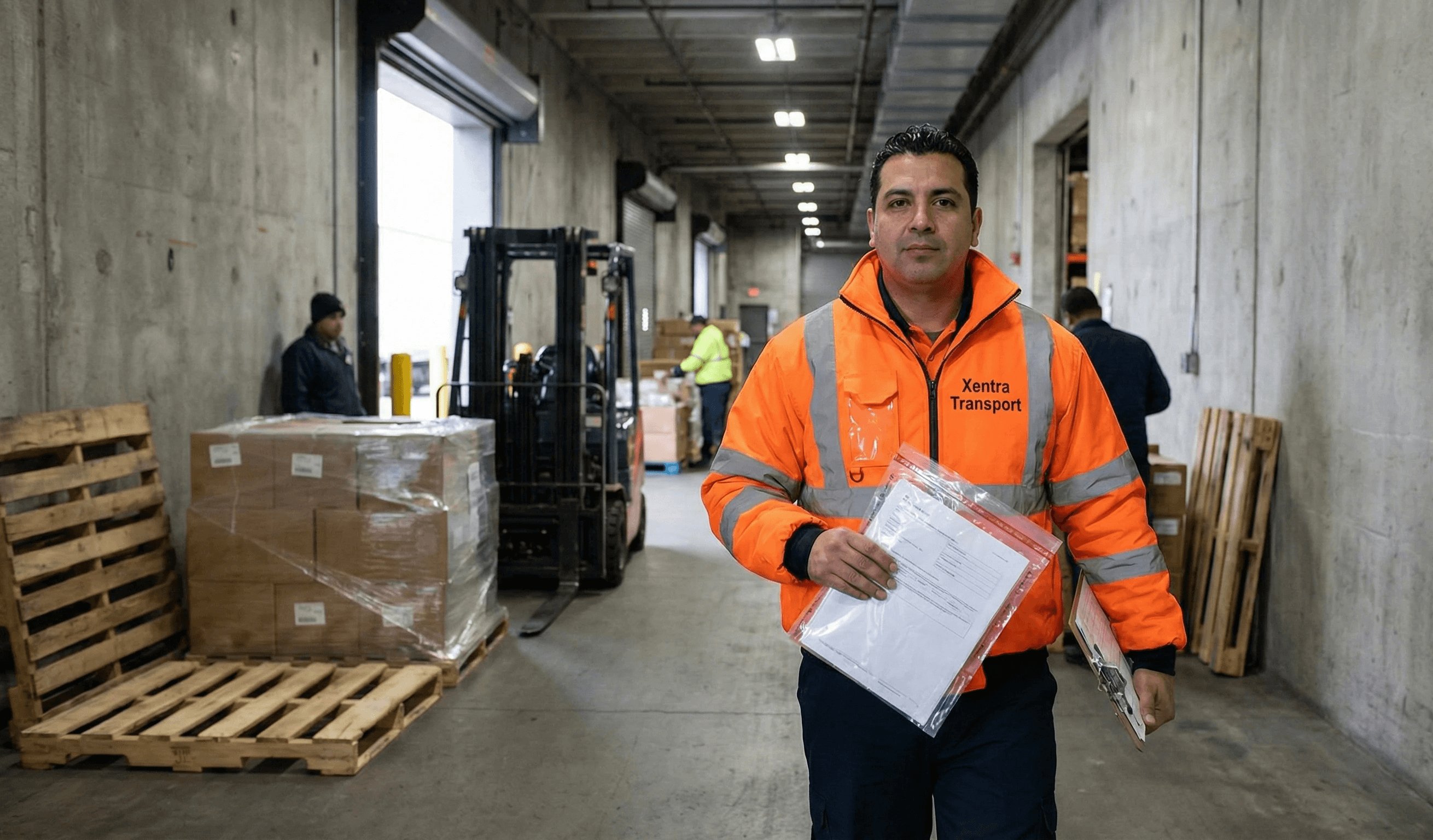

The storage clock is the reason recovery urgency exists. Airline cargo facilities allow a limited period of free time after the shipment is available, and once that lapses, storage accrues on a per-day basis, commonly calculated per hundred kilos with a stated minimum, though the formula varies by handler. The logic mirrors demurrage at the seaport: the facility is a transfer point, not a warehouse, and it prices accordingly. Freight that sits for three days because nobody arranged pickup can accumulate charges that dwarf the cost of the trucking itself.
The other cost is downstream. A component sitting at JFK is a production line waiting, a pharmacy shelf empty, a runway show missing a sample, or a customer receiving a delay notice. Recovery speed is rarely about the trucking rate — it is about what the delay costs everywhere else. Importers, forwarders, and 3PLs who run this well treat release confirmation and truck dispatch as a single coordinated step rather than two separate phone calls.
JFK is one of three gateways, and they are not interchangeable. For freight arriving into northern New Jersey, Newark (EWR) is the closer point of entry; for ocean containers, Port Newark drayage is a different process again with its own free-time rules. Knowing which gateway your shipment routes to — and pre-arranging recovery there — is a planning decision, not a reaction.
What sits around the airport. JFK is in southeastern Queens, and the warehouse and deconsolidation belt that serves it runs through Jamaica, Howard Beach, Ozone Park, and Maspeth — which is where a great deal of recovered freight actually goes first, to be broken down before final delivery rather than moving straight to the consignee. See our warehouses and 3PL providers practice and distribution warehouse delivery. Where the shipment is still under a forwarder's control, our freight forwarding services and international courier service pick up where recovery ends. Delayed or misrouted passenger baggage is a different service entirely — see luggage pickup and delivery.
Xentra Transport runs JFK air cargo recovery and the delivery that follows: into all five boroughs, across New Jersey, out to Long Island, Westchester, and Connecticut, and down the Philadelphia and Baltimore corridors. We confirm availability with the facility before dispatching, bring the right equipment, and carry proof of delivery on every run. If your freight needs to catch a departing flight instead of leaving the airport, our next flight out service handles that. Call 877-709-2711 with your air waybill number.
See Why They Choose Us
We Recover at JFK and Deliver the Same Day — City or Tri-State
Book JFK Pickup
Meet Your Industry Needs Call Us


