What You Get on Every Delivery
Live GPS tracking
Live GPS tracking shared automatically with stakeholders
Signture & Proof of delivery
Photo + signature POD delivered same day
Trained & insured Couriers
W-2 or vetted IC couriers — never app-based gig drivers
Read More About Our Tracking Services
Most NYC delivery problems start at the door. A truck arrives at a Class A Midtown commercial building, the doorman or freight desk asks for the COI on file with property management, the carrier doesn't have one, the delivery gets refused, the truck has to leave with the load still on board. Reschedule, rebook, redispatch with the COI properly issued in advance — costing the sender a missed deadline and the carrier a wasted trip. This isn't a rare failure mode in Manhattan; it's the default failure mode for any carrier that doesn't run COI workflow as standard practice. Most Class A office buildings, most newer residential high-rises, most hospitality buildings, most newer commercial buildings citywide require a Certificate of Insurance from the delivering carrier on file with property management before the truck can even pull up to the loading dock.
Add to that the freight elevator constraint: most Manhattan high-rises segregate freight from passenger elevators, with freight elevators that have specific operating hours (typically 6 AM-12 PM for receiving, sometimes also 6 PM-10 PM, varies by building), require advance booking with property management or building services, and run only with a building engineer or elevator operator on-site. Show up outside the freight elevator window without a booking, and even if you have the COI, the building won't run the elevator for you. The combination — COI required + freight elevator constraint + commercial vehicle parking restrictions on most Manhattan blocks + doorman protocol on residential — makes Manhattan high-rise delivery operationally complex enough that a substantial portion of "delivery failures" reported in NYC are really high-rise access failures, not actual delivery failures.
Xentra Transport runs Manhattan high-rise delivery as standard practice across the entire fleet. COI issuance is at no charge, takes 30-60 minutes from booking, and we have COIs on file with most major Manhattan property management companies already. Freight elevator booking gets coordinated as part of dispatch — we call the building before the truck rolls. Driver crews are trained on the doorman protocol, the freight desk routine, the dock-vs-passenger-entrance distinction, and the time-window discipline that lets a Manhattan high-rise delivery actually clear in one trip. This guide walks through what a COI is, what freight elevator booking looks like, the doorman protocol, and the booking checklist that prevents the wasted-trip failure mode. For broader COI specifics across all NYC delivery, see our Certificate of Insurance guide; for NYC commercial vehicle access rules, our NYC commercial vehicle regulations guide.
Certificate of Insurance (COI). A COI is a document from the carrier's insurance broker confirming that the carrier carries general liability and auto insurance at specified minimum limits, with the building owner and property manager named as additional insureds (and sometimes the tenant, depending on building requirements). The point of the COI is to make sure that if your delivery causes damage in the building — say the dolly scratches the elevator wall, the pallet jack cracks a marble floor, the truck damages the loading dock — the carrier's insurance covers it, not the building's policy. Most Manhattan Class A buildings require minimum $1M-$2M general liability and $1M auto, with the building owner and management company named as additional insureds. Some buildings require higher limits. Some require specific endorsements (waiver of subrogation, primary and non-contributory wording). The exact requirements vary by building. We issue COIs at no charge from our broker, typically within 30-60 minutes of booking. Send dispatch the building's COI requirement template at booking — most buildings provide one — and we have the COI issued and on file with property management before the truck pulls up.
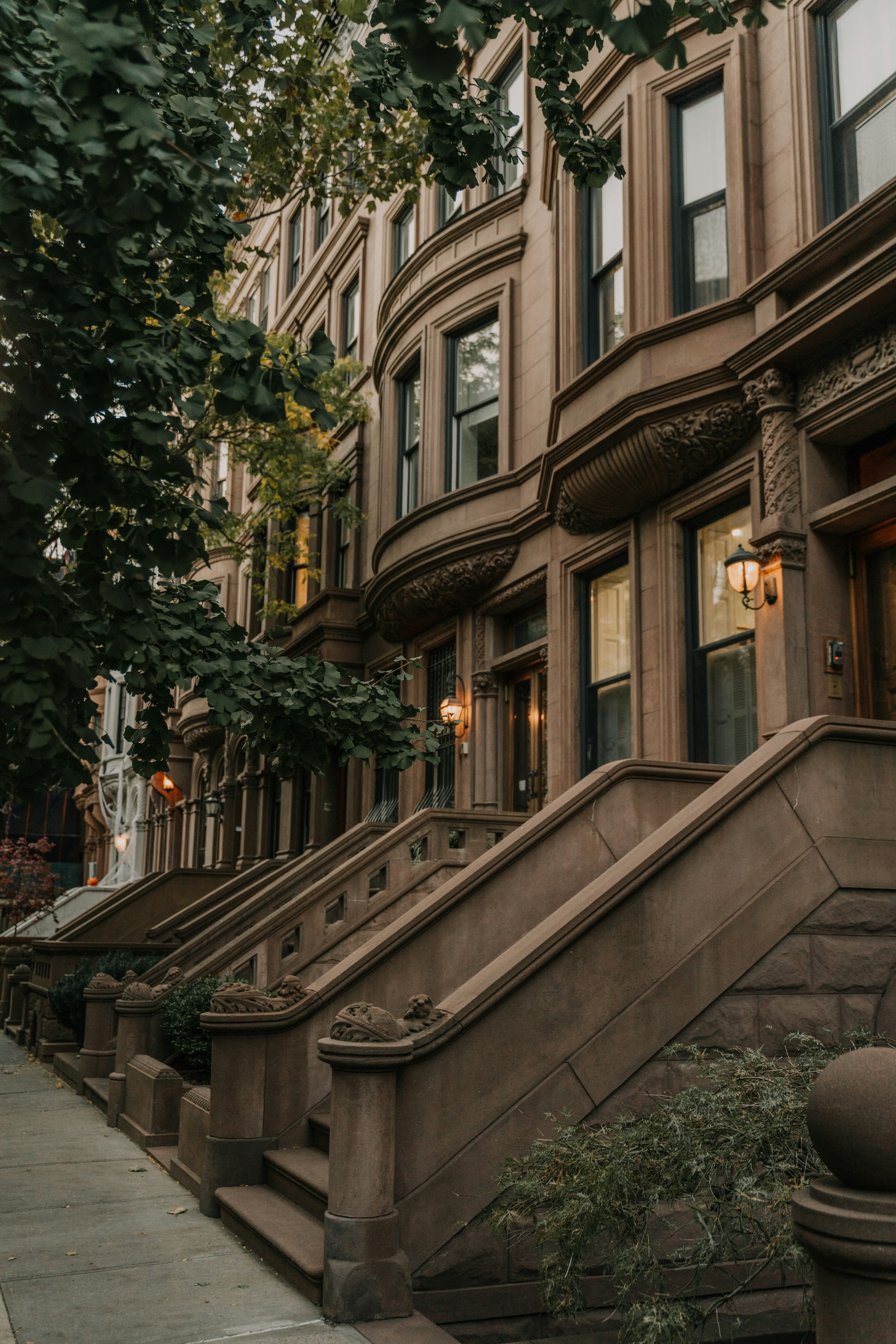
Freight elevators. Most Manhattan commercial and residential high-rises segregate freight (cargo, deliveries, oversized items) from passenger circulation. Freight elevators are typically larger, run on different schedules than passenger elevators, and require advance booking. Standard operating windows: 6 AM-12 PM for receiving, sometimes 6 PM-10 PM for after-hours. Some buildings allow freight elevator use 24 hours with advance booking; some restrict it to weekdays only; some charge a fee for after-hours use. The booking is typically made with the building's loading dock manager or property management, sometimes 24-48 hours in advance for larger deliveries. Smaller deliveries (small parcels, single envelopes, light packages) often don't need freight elevator booking — they ride the passenger elevator with the doorman's permission. Box trucks, pallet jacks, large furniture, and any delivery that won't fit in a passenger elevator's standard footprint require freight elevator booking. Dispatch coordinates this as part of high-rise booking.
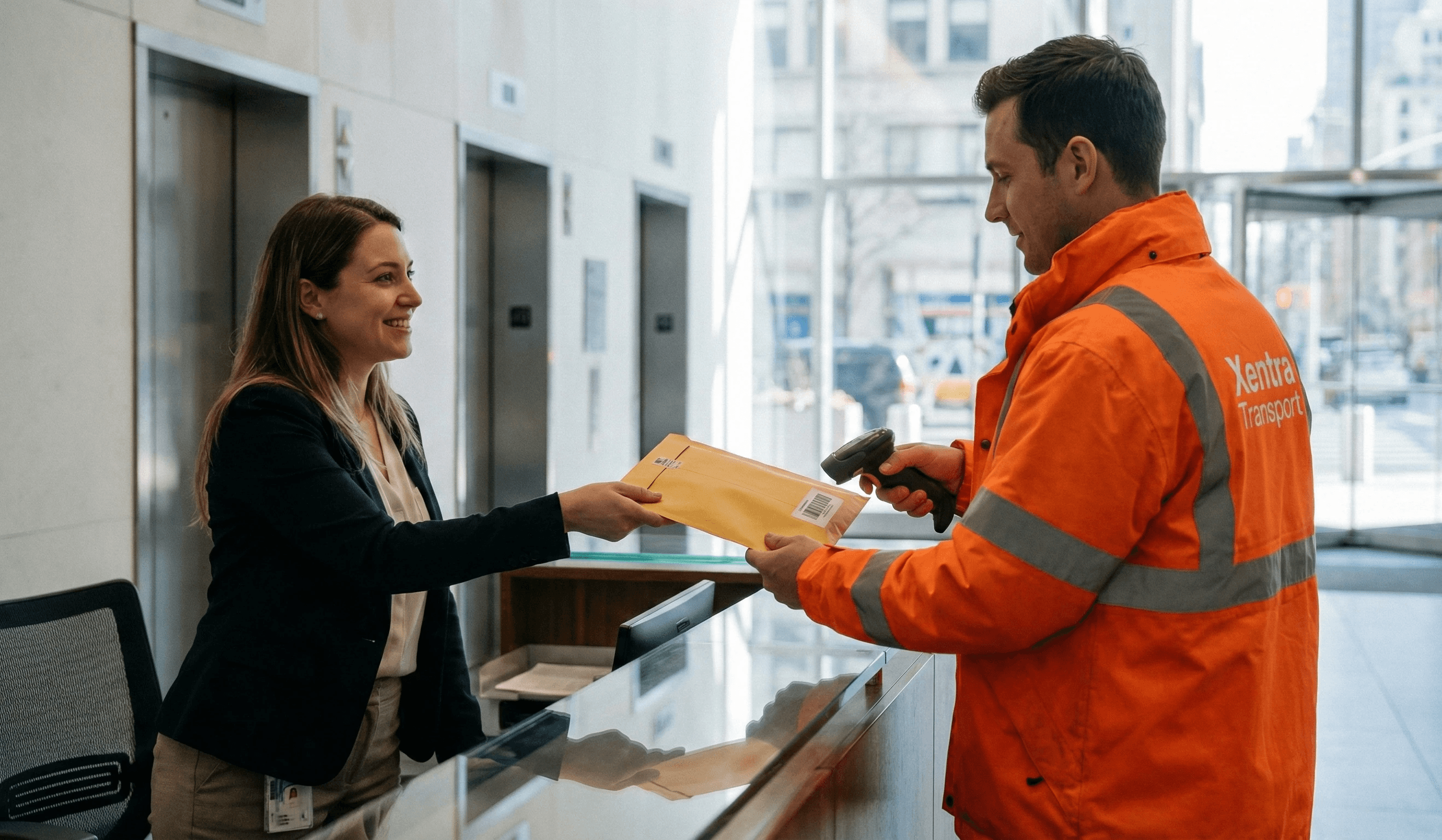
Doorman / freight desk protocol. Class A residential and commercial buildings have a staffed front desk or freight entrance with sign-in protocol. The driver presents ID, the COI is verified against the building's records, the doorman or freight clerk logs the delivery, calls the destination tenant or office to verify they're expecting the delivery, and either escorts the driver to the freight elevator or directs them to the loading dock. For sensitive deliveries (legal sealed material, confidential documents, high-value packages, signature-required items), the doorman protocol may require the recipient to come down to the lobby or freight desk to receive the package directly rather than the driver going up. This is a building rule, not the carrier's choice. Confirm at booking which protocol applies. For broader chain-of-custody mechanics on sensitive deliveries through high-rise buildings, see our legal chain-of-custody guide and white-glove delivery service.
Learn More On Our Quality Assurance

Before booking, confirm: the receiving building's name and street address (not just the tenant address); the floor and suite/apartment number; the building's COI requirements (limits, additional insureds, any specific endorsements — most buildings provide a template); the freight elevator hours and any booking requirements; the loading dock or freight entrance address (often a different street than the building's main entrance); the recipient name, phone, and any special access instructions; whether the recipient is in the office or expects you (front desks call up to verify); whether the building requires advance scheduling for larger deliveries; and any vehicle restrictions (some buildings require a specific delivery time window even for small packages, particularly residential luxury buildings with concierge service).
For pallet, freight, and box-truck deliveries to high-rise commercial: COI on file before the truck rolls is non-negotiable; freight elevator booking confirmed with property management; loading dock address (not the building's main entrance) confirmed; arrival within the booked freight elevator window (typically a 60-90 minute window); receiver waiting at the loading dock or freight entrance to escort the offload. For residential high-rise white-glove deliveries (designer furniture, art, gallery work, oversized items): COI on file; freight elevator booking; two-person crew typically required for stair handling or tight turns; white-glove protocol for inside placement. For sensitive document and legal deliveries: typically passenger-elevator-friendly with doorman handoff or recipient signature in the lobby; legal courier protocols for chain-of-custody documentation.
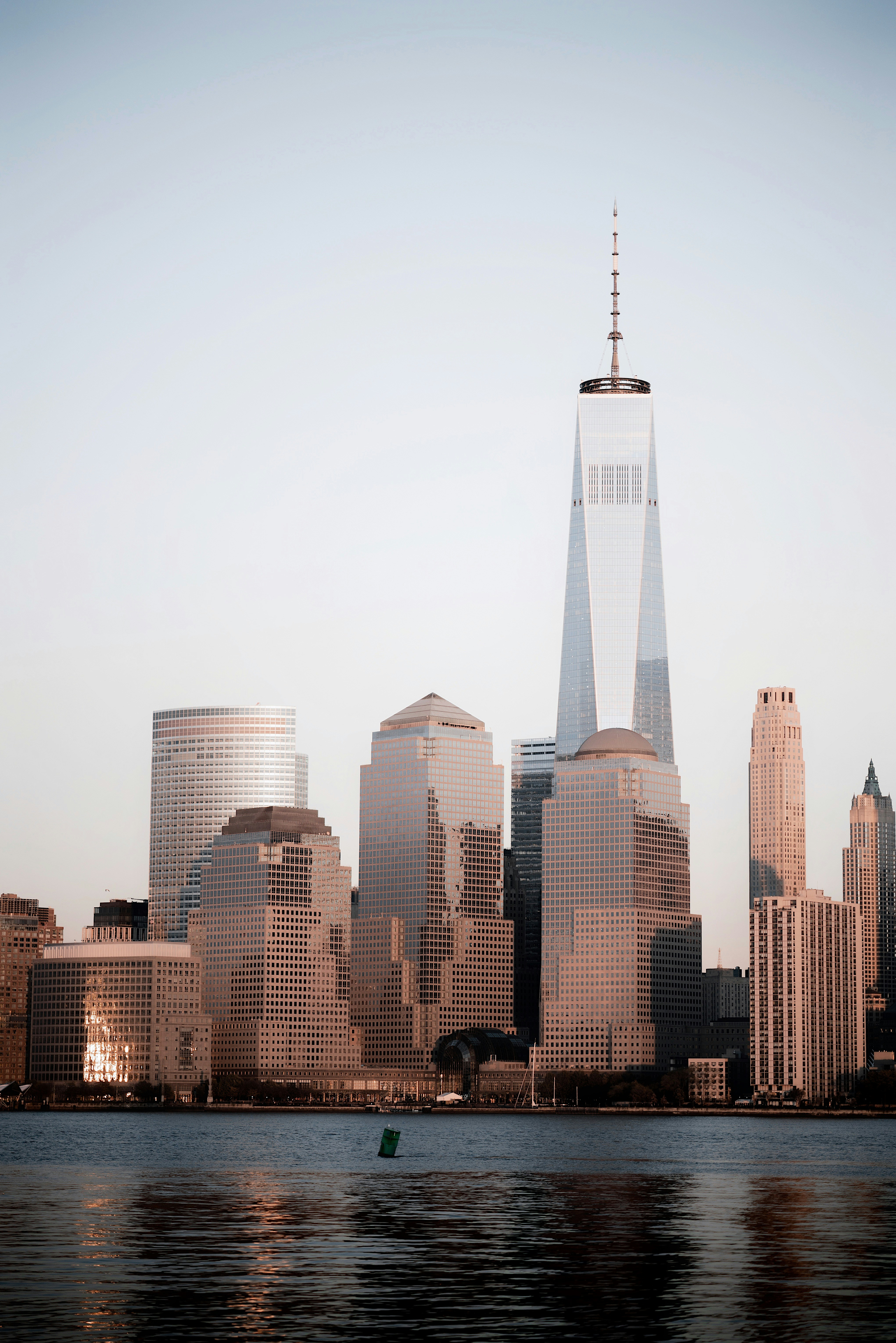
Common Manhattan high-rise corridors we deliver to daily. Midtown East and West (Park Avenue, Fifth Avenue, Sixth Avenue, Madison Avenue) — the densest commercial corridor in the world with extensive Class A building stock. The Financial District (Wall Street, William Street, Water Street, Broad Street) — older buildings with strict freight protocols. Hudson Yards and the Far West Side — newer Class A buildings with modern freight elevator systems. Tribeca and SoHo — mixed commercial/residential with smaller building stock and varying freight access. Upper East Side and Upper West Side residential luxury buildings. The newer Hudson Waterfront commercial corridor extends across the river to Jersey City, Hoboken, and Weehawken — same high-rise delivery dynamics on the NJ side. Cross-Hudson high-rise volume on the NY-to-NJ corridor. Outside Manhattan, similar high-rise dynamics apply to Long Island City, downtown Brooklyn (the Court Street and Pierrepont Plaza corporate corridor), and the DUMBO commercial cluster. For new businesses setting up regular Manhattan high-rise delivery, see our new business delivery setup guide and recurring delivery prep guide; for COI specifics, our Certificate of Insurance guide.
See Why They Choose Us
Class A Building Approved. COI Issued at No Charge. Same-Day NYC.
Book High-Rise Delivery
Meet Your Industry Needs Call Us


