New York City's congestion pricing program just passed its one-year anniversary — and it's not going anywhere. On March 3, 2026, a federal judge ruled that the Trump administration's attempt to kill the program was "arbitrary and capricious." The $9 toll on vehicles entering Manhattan below 60th Street is here to stay.
For businesses that depend on deliveries in Manhattan, this changes the math on every single shipment. Whether you're a law firm receiving court filings, a retailer restocking inventory, or a medical office receiving lab specimens, congestion pricing is now a permanent line item in your logistics costs.
Here's exactly how it affects you — and what you can do about it.
What Is NYC Congestion Pricing?
Congestion pricing charges vehicles a toll to enter Manhattan's Central Business District (CBD) — the area south of 60th Street. The program launched on January 5, 2025, and has been operational for over a year.
The current toll structure:
Passenger vehicles: $9 per entry during peak hours (5 AM – 9 PM weekdays, 9 AM – 9 PM weekends)
Small trucks and buses: $14.40 per entry
Large trucks (over 7,000 lbs): $21.60 per entry
Off-peak hours: Reduced rates (75% discount for overnight entries)
Motorcycles: $4.50 per entry
Vehicles are charged once per day — meaning a delivery van that enters the zone, leaves, and re-enters only pays one toll per calendar day. However, trucks and commercial vehicles on certain credits and plans may see different billing structures.
How Congestion Pricing Directly Impacts Your Delivery Costs
If your business receives or sends deliveries into Manhattan below 60th Street, here's what the real-world cost impact looks like.
For Businesses Using National Carriers (FedEx, UPS, USPS)
National carriers have already baked congestion pricing surcharges into their Manhattan rates. FedEx and UPS both implemented "congestion zone surcharges" in early 2025. Depending on the carrier and package type, this adds $1.50 to $6.00 per package for deliveries within the zone.
If your business receives 20 packages per week in Midtown, that's an additional $1,560 to $6,240 per year in surcharges you may not have noticed on your invoices.
For Businesses Using Local Courier Services
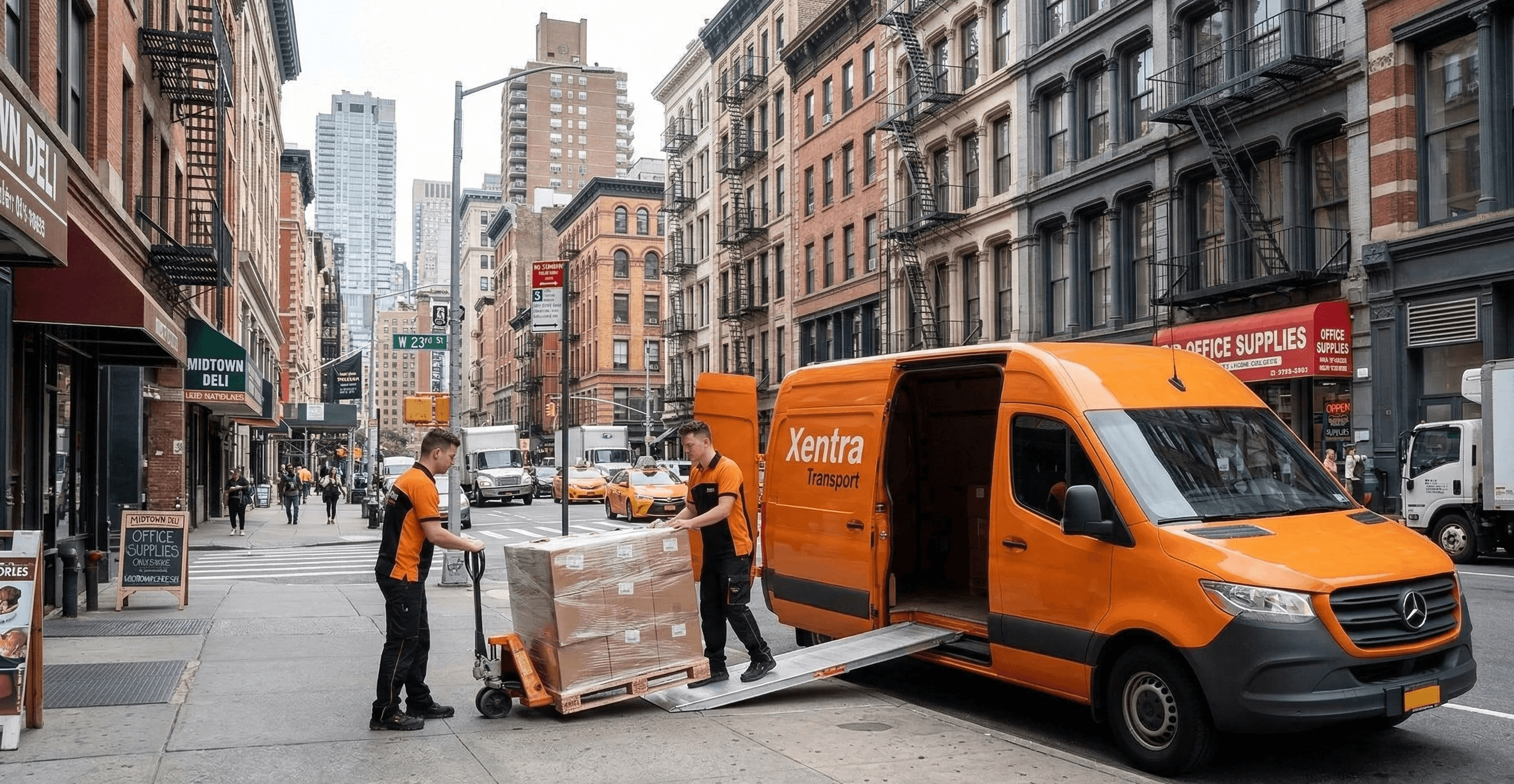
Local couriers absorb the toll directly. A cargo van entering the zone pays $14.40. If your courier is making a single dedicated delivery, that $14.40 gets passed to you — either as a line item or built into the rate.
However, smart courier companies that batch multiple deliveries into a single zone entry can spread that toll across several clients. A courier completing 5 deliveries per trip effectively reduces the per-delivery toll impact to under $3.
This is where your choice of courier partner matters. A courier with route optimization and zone-entry batching saves you money. A courier making single-delivery trips in and out of the zone costs you more.
For Businesses Running Their Own Delivery Vehicles
If you operate your own fleet, congestion pricing hits hardest. A company van making 2 deliveries per day into the CBD pays $14.40 daily — that's $3,744 per year for a small truck, or $5,616 per year for a larger vehicle. And that's on top of existing bridge and tunnel tolls, parking, and fuel costs.
Many businesses are finding it more cost-effective to outsource Manhattan deliveries to a courier service rather than absorbing the toll, insurance, parking tickets, and driver time internally.
The Numbers After One Year: What's Actually Changed
The Metropolitan Transportation Authority (MTA) released comprehensive data on congestion pricing's first-year impact:
27 million fewer vehicles entered the tolling zone compared to the prior year
Traffic delays inside the zone dropped 25% — meaning faster delivery times
Bus speeds increased 2.3% in the CBD
87,000 fewer cars per day entering below 60th Street
22% reduction in particulate matter (air pollution) within the zone, according to Cornell University research
$562 million in net revenue collected — exceeding the $500 million target
For delivery and courier operations, the traffic reduction is actually a net positive. Fewer cars on the road means faster transit times through Manhattan. A delivery that used to take 45 minutes in Midtown gridlock may now take 30-35 minutes. That efficiency gain partially offsets the toll cost.
How Businesses Are Adapting
Smart businesses in Manhattan are making three key adjustments to manage congestion pricing costs:
1. Shifting Deliveries to Off-Peak Hours
The congestion toll drops by 75% during overnight hours. Businesses that can receive deliveries before 5 AM or after 9 PM save significantly. Restaurants, retail stores, and offices with loading docks are increasingly scheduling deliveries for early morning or late evening windows.
This is driving demand for courier services that operate 24/7 — because most traditional couriers close by 6-7 PM and don't work weekends.
2. Consolidating Shipments
Instead of receiving 5 separate deliveries per week, businesses are working with courier partners to consolidate into 2-3 batched deliveries. This reduces the number of zone entries and spreads the toll cost across more items.
A law firm that used to call a courier 4 times per week for individual document runs can save $2,000+ annually by switching to a scheduled twice-weekly pickup route.
3. Switching to Local Courier Partners
National carriers pass congestion surcharges to every customer regardless of efficiency. Local courier services that plan routes inside the zone and batch deliveries can offer better per-delivery economics.
A dedicated local courier entering the zone once and completing 8-10 deliveries spreads the $14.40 toll across all clients. The per-delivery cost: under $2. Compare that to a $4-6 surcharge from a national carrier on every single package.
What This Means for Different Industries
Law Firms
Court filings, document deliveries, and inter-office runs are daily necessities for Manhattan law firms. Most firms below 60th Street are inside the congestion zone, meaning every incoming and outgoing courier trip incurs the toll.
A mid-size firm sending 3-5 messenger runs per day could see $15,000-$25,000 in annual toll-related cost increases if using inefficient courier services. Firms that switch to a dedicated courier with a monthly retainer and route optimization can cut this by 40-60%.
Medical Offices and Labs
Specimen pickups, prescription deliveries, and medical records transfers happen on tight schedules. Labs operating inside the CBD are paying the toll on every courier run. For temperature-sensitive specimens, delays aren't an option — you can't simply shift to off-peak hours.
The solution: a dedicated medical courier partner that enters the zone once per route and handles multiple clinic pickups in a single trip.
Retail and E-Commerce
Inventory restocking, customer deliveries, and returns all add up. Retailers in SoHo, Midtown, and the Financial District are particularly impacted. Many are shifting to a model where inventory is delivered in bulk during off-peak hours, and same-day customer deliveries are batched into afternoon or evening runs.
Event and Production Companies
Trade shows at the Javits Center, events at Manhattan venues, and production logistics all involve moving large volumes of equipment into the zone. A single box truck entry costs $21.60. Multiple trucks for a large event can add hundreds in tolls alone.
Planning deliveries during off-peak windows and using a single larger truck instead of multiple smaller vehicles saves significantly.
How to Reduce Your Delivery Costs in the Congestion Zone
Here's a practical checklist for any business operating in or delivering to Manhattan below 60th Street:
Audit your current delivery costs. Check your FedEx, UPS, and courier invoices for congestion zone surcharges. Most businesses don't realize how much they're paying.
Switch to a local courier with route optimization. A courier that batches deliveries inside the zone spreads the toll across multiple clients, reducing your per-delivery cost.
Consolidate your shipments. Fewer zone entries means fewer tolls. Work with your courier to establish scheduled pickup and delivery windows rather than on-demand single trips.
Shift to off-peak when possible. If your business can receive deliveries before 5 AM or after 9 PM, the toll drops by 75%. This requires a courier partner that operates 24/7.
Consider a monthly courier retainer. Predictable monthly billing eliminates per-trip toll surprises and incentivizes your courier to optimize routes efficiently.
Negotiate toll transparency. Ask your courier service whether their quotes include congestion tolls or add them separately. Transparent pricing helps you budget accurately.
The Bottom Line
NYC congestion pricing is permanent. The $9 base toll and $14.40-$21.60 commercial vehicle tolls are now a fixed cost of doing business in Manhattan. Businesses that adapt their delivery logistics — through route optimization, off-peak scheduling, shipment consolidation, and smart courier partnerships — will absorb this cost efficiently.
Businesses that don't adapt will watch thousands of dollars per year disappear into avoidable toll charges and surcharges.
The companies that win are the ones that treat delivery logistics as a strategic decision, not an afterthought.
Need a courier partner that helps you navigate congestion pricing costs? Xentra Transport operates 24/7 across all five NYC boroughs, offering route-optimized deliveries, off-peak scheduling, and monthly retainer plans that keep your delivery costs predictable. We batch deliveries inside the congestion zone to minimize toll impact for every client.
Get a free delivery cost audit: Call (877) 709-2711 or request a quote.