
What You Get on Every Delivery
Live GPS tracking
Live GPS tracking shared automatically with stakeholders
Signture & Proof of delivery
Photo + signature POD delivered same day
Trained & insured Couriers
W-2 or vetted IC couriers — never app-based gig drivers
Read More About Our Tracking Services
A cold chain is an unbroken series of temperature-controlled steps — storage, packing, transport, handoff, and storage again — that keeps a product inside its validated range from the moment it leaves the manufacturer or lab until the moment it is administered or used.
The chain does not fail dramatically. It fails quietly, in a vehicle stuck on the Cross Bronx for ninety minutes with a payload that was packed for a forty-minute run. The product still looks fine on arrival. That is precisely the danger.
Most temperature-sensitive freight falls into one of four bands. Controlled room temperature (CRT) is typically 20-25°C, used for many finished pharmaceuticals and tablets, and it matters more than people expect — a van baking in July sun on a Manhattan block exceeds it easily. Refrigerated, 2-8°C is the workhorse band: most vaccines, insulin, GLP-1 injectables, many biologics, blood products, and a large share of clinical specimens. Frozen, around -20°C covers certain reagents, plasma, and specimen types. Deep frozen and cryogenic — dry ice at roughly -78°C, or liquid nitrogen vapor phase below -150°C — covers cell and gene therapy material, some mRNA products, tissue, and reproductive material. Each band demands different packaging, different dwell-time math, and different handling documentation.
The governing expectation across all of them is set out in good storage and distribution practice — USP General Chapter <1079> is the reference most quality teams work from: the product stays in range, deviations are detected, and any excursion is documented and assessed rather than ignored. For specimen-specific handling — tubes, transport media, biohazard labeling, and category classification — see our medical specimen handling guide. For the privacy obligations that ride alongside anything patient-identifiable, see our HIPAA-compliant delivery requirements.

Step 1: Pack for the worst realistic transit time, not the best. A qualified packout is rated for a duration at an ambient profile — for example, 24 hours at summer profile. If your route is normally 45 minutes, you still pack for the traffic event, the building that makes the driver wait, and the receiver who is in a procedure. In New York City the same run can take two or three times longer on a bad afternoon than on a clear morning. Size the packout to the bad day.
Step 2: Use the right refrigerant, correctly. Gel packs conditioned to the wrong temperature are the single most common failure point — frozen gel packs placed directly against 2-8°C product can freeze it, which for many biologics is as damaging as overheating. Conditioning, barrier layers, and payload positioning are part of the validated configuration, not optional refinements. Dry ice sublimates and requires ventilation, hazardous-materials handling under air transport rules, and a driver who understands not to seal it in an airtight compartment.
Step 3: Put a data logger inside the payload. Not taped to the outside of the box — inside, with the product. A single-use USB or Bluetooth logger recording at one- to five-minute intervals, with a stated accuracy tolerance and a calibration certificate, costs little and produces the record that determines, after the fact, whether the product is usable. Without it, an excursion is a guess. With it, you have a defensible time-and-temperature trace for quality assurance, for the manufacturer, and for the regulator.
Step 4: Control the handoff, not just the drive. The most frequent excursions happen after arrival: the cooler sits on a loading dock, in a mailroom, or on a nurses' station counter while the person authorized to receive it is unavailable. Name the recipient in advance, confirm someone is on site to move it straight into refrigeration, and record the time the payload actually entered controlled storage — not the time the driver walked in the door. Live tracking and proof-of-delivery mechanics are covered in our delivery tracking guide.
Step 5: Have an excursion procedure before you need one. If a logger shows a deviation, the shipment does not get quietly used and it does not get automatically destroyed. It gets quarantined, the trace gets pulled, and the sponsor, manufacturer, or pharmacist makes a documented stability call. Agree in advance on who makes that call and how they are reached after hours.
Learn More On Our Quality Assurance
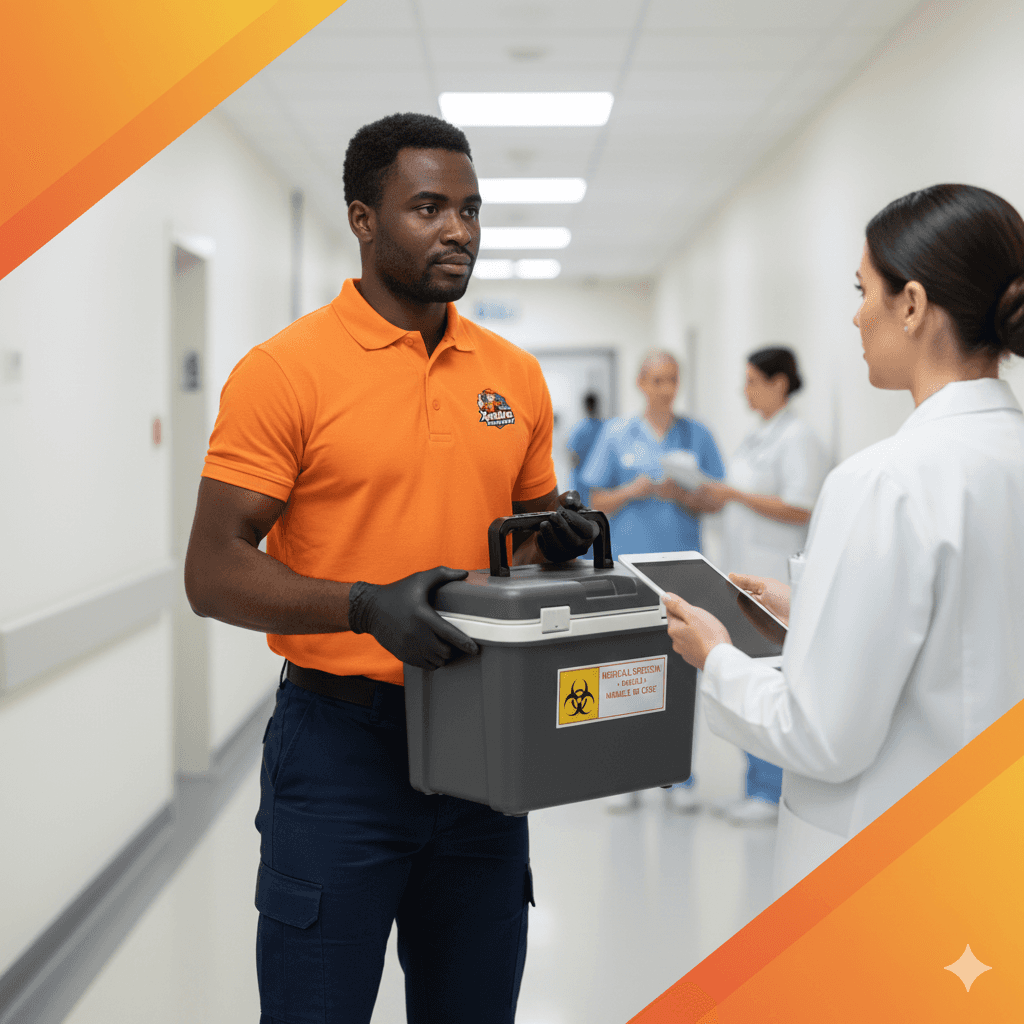
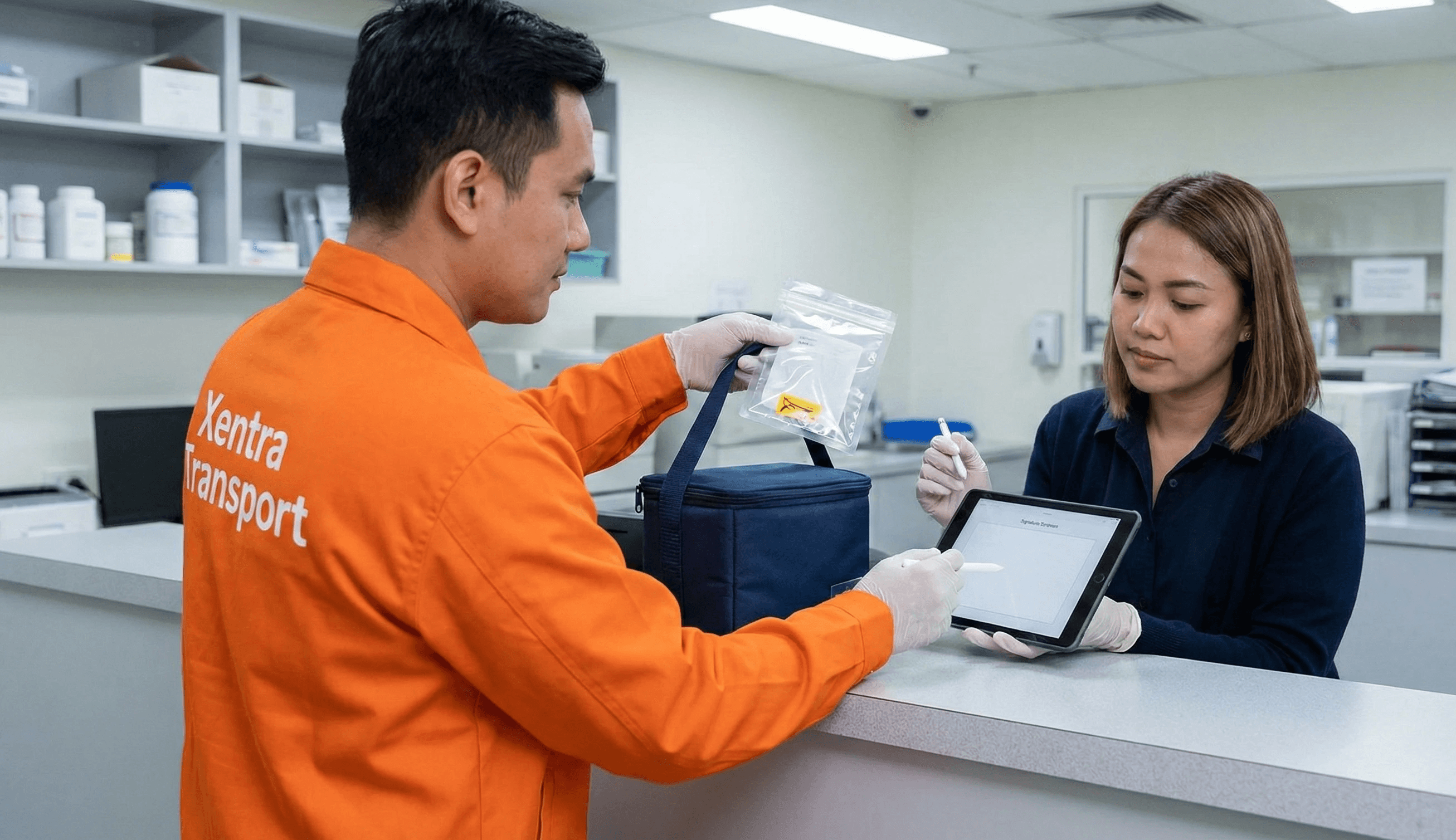
Hospital, lab, and clinic networks. The dense corridor of academic medical centers and reference labs across Manhattan, the Bronx, and Brooklyn generates continuous 2-8°C and frozen movement: specimens to reference labs, reagents and controls inbound, blood products between facilities, and pathology material to and from consulting readers. Time-and-temperature integrity here is not a preference, it is the basis on which the result is reportable. Our healthcare and labs practice runs these on scheduled and STAT dispatch.
Pharmacy, specialty pharmacy, and home infusion. Refrigerated prescriptions — insulin, GLP-1 agonists, fertility medication, biologics, compounded sterile preparations — moving from a pharmacy or 503B compounder to a patient residence or infusion suite. This is one of the fastest-growing cold chain segments in the city and the one most exposed to the last hundred feet: a doorman building where the package waits in a lobby is a failed delivery even if the driver was on time. See our pharmacy and prescription delivery guide for the compliance side.
Clinical trials and research. Site-to-central-lab shipments, investigational product to sites, and cryogenic material moving between research institutions carry the strictest documentation burden of anything on the road. Every run needs a defensible chain of custody, and the sponsor's protocol usually dictates packaging, logger placement, and escalation contacts.
Food, beverage, and perishables. Restaurants, caterers, meal-kit operators, and specialty grocers run their own version of the same problem under FDA Food Code expectations — cold items held at or below 41°F, hot items at or above 135°F, with the range between them treated as the zone you move through quickly rather than sit in. Our catering and floral delivery guide covers that side in detail, and catering and meal delivery handles the dispatch.
Smaller-volume cold chain that still has to be right. Dental laboratories run a same-day loop with practices, moving impressions, models, and finished appliances that are time-sensitive even when they are not temperature-sensitive — see dental lab pickup and delivery. Veterinary practices and animal hospitals move diagnostic samples, vaccines, and pharmacy items to reference labs on the same 2-8°C discipline as human healthcare; see our veterinary and animal hospitals practice. And for the genuinely time-critical runs — a STAT specimen, an emergency blood product, a replacement reagent for an assay already underway — dispatch goes through rush and STAT messenger service or critical deliveries. On the New Jersey side the same coverage runs through our NJ medical courier service.
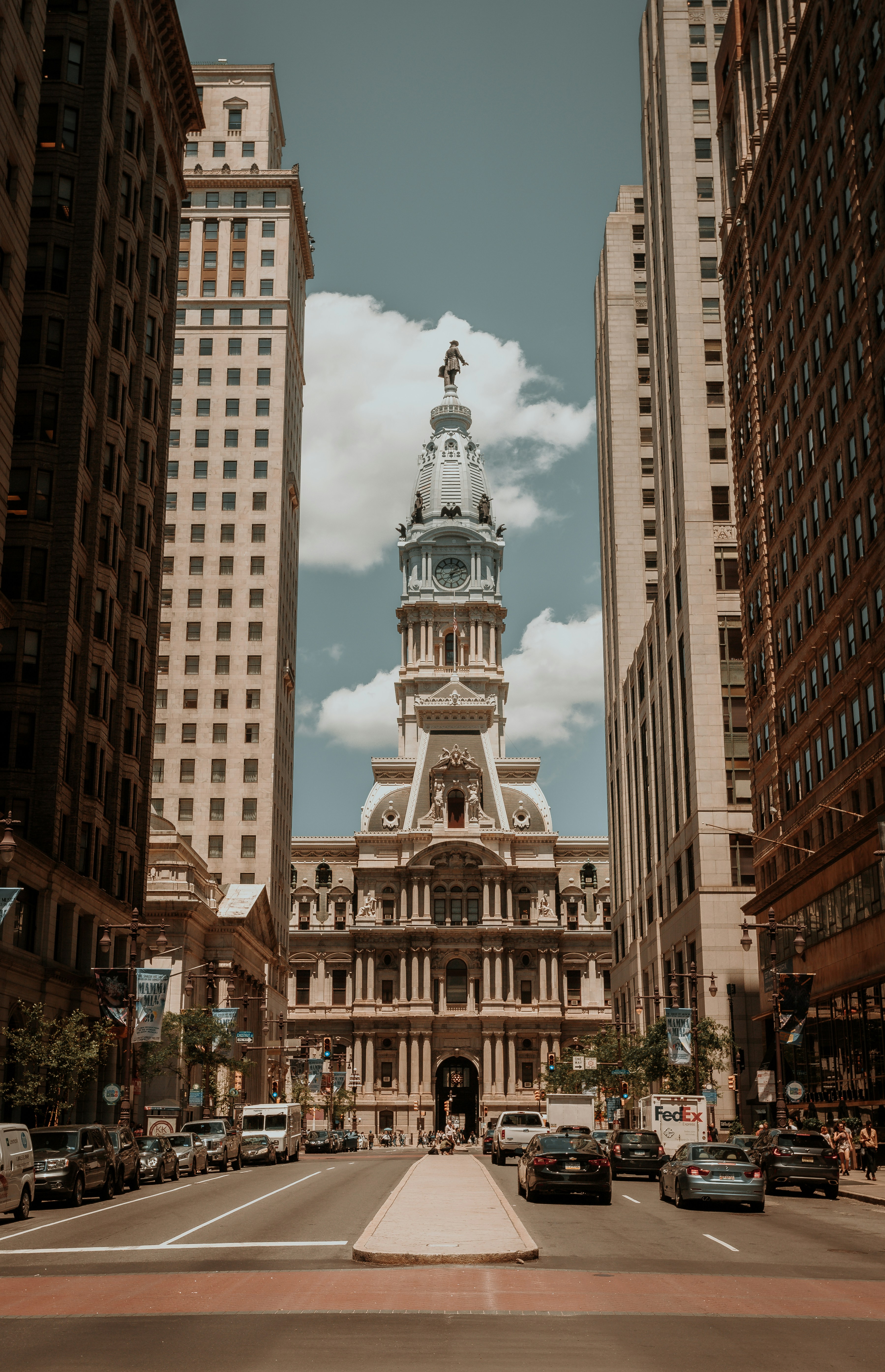
Xentra Transport runs temperature-controlled same-day and scheduled cold chain across all five boroughs, New Jersey, Long Island, Westchester, and Connecticut, including the NY-to-Philadelphia pharma corridor. Call 877-709-2711 with your temperature band, payload size, and route, and we will tell you what packout and logging the run actually requires.
See Why They Choose Us
Temperature-Sensitive Shipment? Don't Let the Chain Break in Traffic.
Book Temperature-Controlled Transport
Meet Your Industry Needs Call Us


