




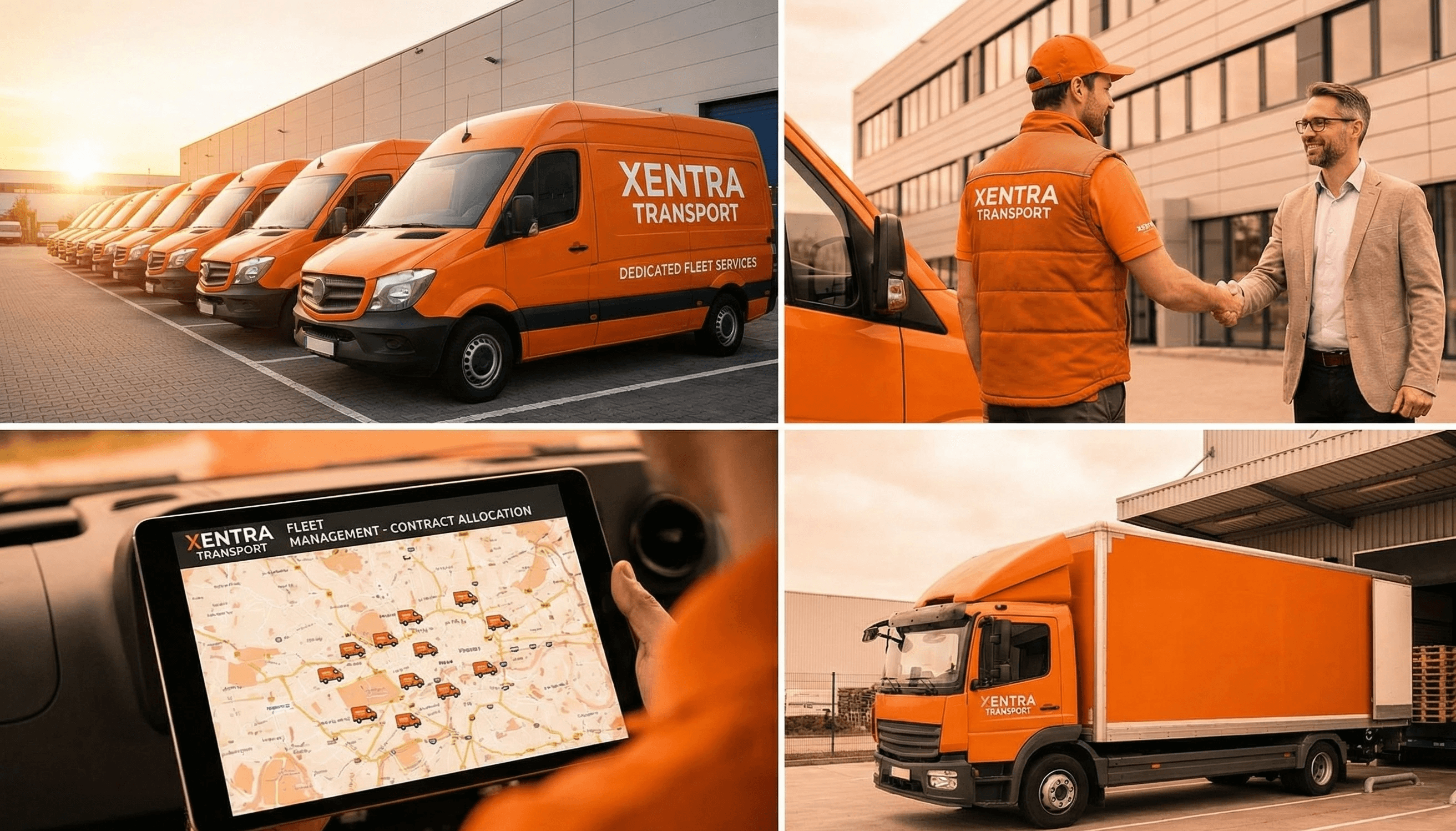
Shifting from Capital Expenditure (CapEx) to Operational Flexibility
Owning a fleet is one of the most expensive operational decisions a business can make. A single 26-foot box truck runs $80-120K to acquire new, plus annual maintenance and tire costs averaging $8-15K, plus commercial insurance at $9-18K per vehicle per year, plus driver labor (a CDL-B driver in the NYC metro market runs $65-90K fully loaded with benefits and payroll taxes), plus parking, fuel, downtime, depreciation, accident exposure, and the management overhead to run a fleet operations function. A mid-sized operation needing 10-15 trucks at peak season and only 4-5 the rest of the year is paying full CapEx and labor cost on 10-15 trucks year-round just to be ready for peak. The math gets worse when seasonal surge or contract-driven demand swings the requirement up to 50 or 100 vehicles temporarily. No business that's not in transportation as its core function should be running this kind of capital tied up in vehicles.
Dedicated fleet logistics flips the model. Instead of owning the fleet, you secure capacity from a logistics partner who already owns the trucks, employs the drivers, runs the maintenance, and absorbs the depreciation and insurance. We deploy 10-100+ vehicles on dedicated contracts depending on actual demand profile — daily ongoing volume gets a fixed dedicated allocation; seasonal surge or peak event needs get a flexible scale-up. Vehicle stack ranges from cargo vans through 26-foot box trucks with liftgate; drivers are in-house team members, not marketplace contractors; insurance, COI coverage, and liability sit entirely on our side; you get capacity when you need it without the asset-ownership tail. Fleet operations supported by freight delivery infrastructure, NJ warehouse and 3PL handling, and the full NYC courier network behind every contract. Cross-state capacity on the NY-to-NJ, NY-to-Philadelphia, and NY-to-Boston corridors.
Driver turnover is the silent cost killer of logistics operations that try to scale without a dedicated logistics partner. Marketplace courier apps churn drivers at rates north of 75% annually — the driver who handles your delivery this week may not be on the platform next month, and the next month's driver has no familiarity with your facility, your protocol, your dock, your security desk, your closing-time rhythm. Brokered freight and 1099 contractor models have similar churn problems and a layer of opacity over the actual driver relationship. Asset-based dedicated fleet operations run on driver retention — we employ our drivers, train them, keep them, and your dedicated allocation pulls from the same driver pool from week to week. A retail chain doing daily store replenishment gets the same 4-5 drivers running their route every week. A medical operation doing daily specimen pickups gets the same 2-3 medical-trained drivers handling the chain of custody. A construction supplier handling daily site deliveries gets the same drivers who know the GCs at every active jobsite.
Operational continuity matters because logistics is fundamentally a people-and-process problem, not a vehicle problem. The vehicle is just the tool. The actual delivery happens because a driver knows the receiver, knows the building, knows the dock, knows the people on the other side, knows the right time of day to hit a specific receiver, knows the alternate route when the BQE is shut down, knows when a freight elevator is broken and the delivery has to come through the front door. Liability shielding is the other major value driver. Insurance, COI, accident exposure, workers' comp, and DOT compliance all sit on our side of the relationship — your business is not exposed to the operational and legal risk of running a fleet. For ongoing volume tied to recurring schedules, dedicated fleet allocations integrate with our NJ scheduled service framework for predictable routing and locked rates. For seasonal surge, contract-driven peak demand, or one-time large-scale operations, we scale capacity up and back down without leaving you holding capital tied up in unused vehicles. Live operational visibility through live tracking on every truck.
Peak-season retail surge. Holiday-season replenishment when chain volume triples for 8-10 weeks; back-to-school surge for apparel and supplies retailers; special-event retail for sporting goods, fashion, and gift retail. We scale dedicated allocations from baseline to peak and back, with the same drivers continuing on routes throughout. Manufacturing and industrial surge. Production line ramp-up, parts replenishment for new product launches, inbound port drayage when import volume runs above baseline through Newark and Elizabeth marine terminals — coordinated through our freight delivery service and the NJ freight operations. Construction project mobilization. Major construction contracts running 6-24 months with consistent daily materials runs to active jobsites — typical fleet allocations of 5-15 vehicles dedicated to the project for the contract duration, supported by construction materials delivery. 3PL and carrier overflow. Capacity support for 3PLs and regional carriers needing surge capacity beyond their owned fleet — running under their dispatch, branded as their service, integrated with their operational systems.
Event and production logistics. Trade shows, film and TV productions, large-scale corporate events, music tours, fashion week — fleet allocations sized to the event with deployment across NYC and the broader Northeast corridor. Detail in our event delivery, production equipment delivery, trade show delivery, and wedding logistics services. Reverse logistics at scale. Returns processing, customer return consolidation, defective inventory recovery — running through our NJ warehouse and 3PL framework with hub staging and consolidated returns dispatch. White-glove and high-value freight. High-value loads coordinated through white-glove delivery with dedicated fleet allocation and chain-of-custody documentation. Operational scale across enterprise contracts in healthcare, retail, manufacturing, construction, and 3PL through asset-based fleet allocations, transparent pricing, and the same in-house dispatch behind every truck. Why NYC businesses are switching from owned fleets to dedicated logistics in 2026: 2026 breakdown.